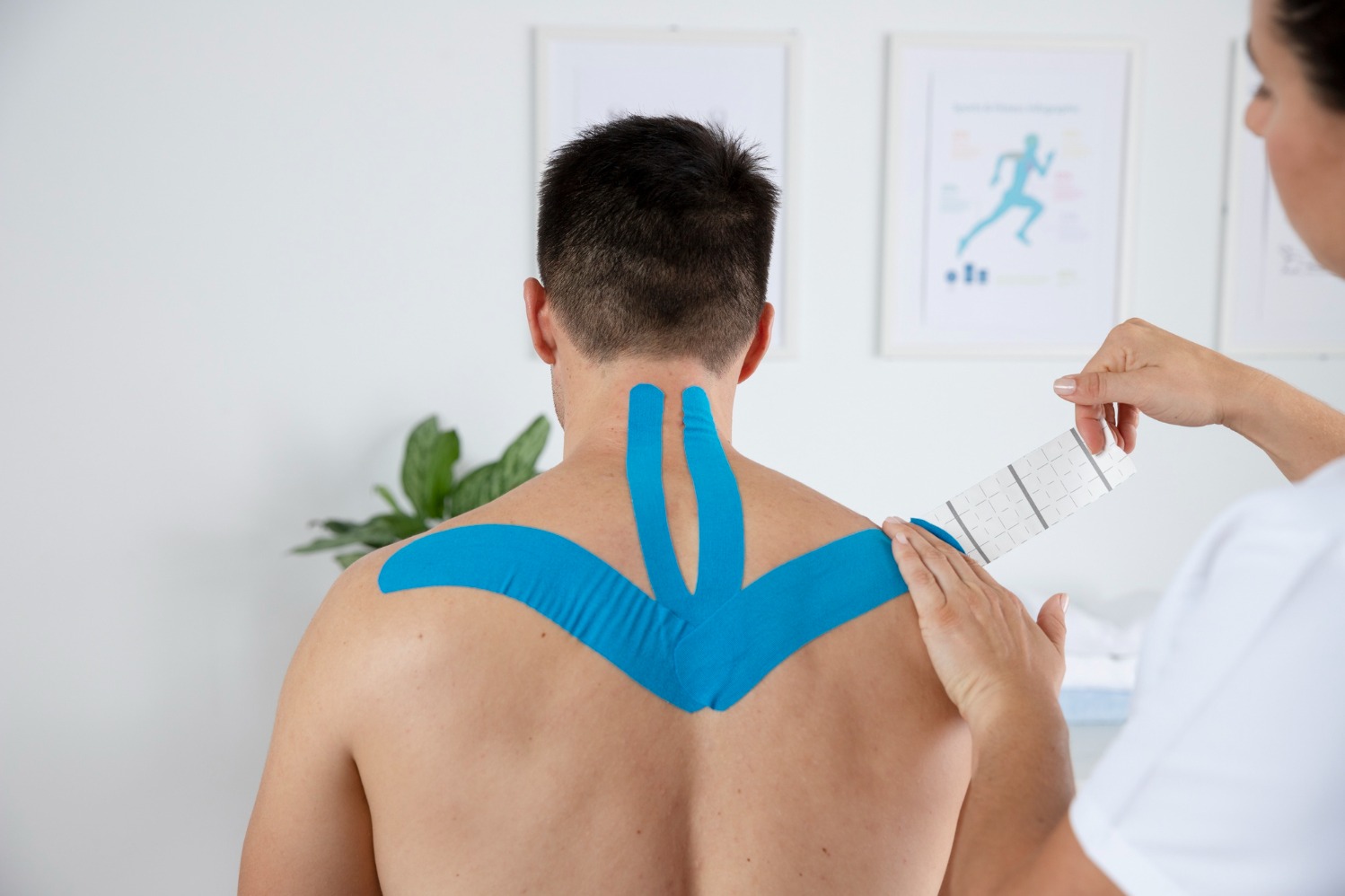
Colourful elastic tape is commonly seen on athletes, runners, and people receiving physiotherapy. This has made kinesiology taping highly visible, but it has also created confusion about what the tape actually does.
Kinesiology tape is a flexible therapeutic tape that may be used as an adjunct to a broader physiotherapy programme. It should not generally be viewed as a substitute for assessment, exercise, rehabilitation, or appropriate medical management.
Why Is Kinesiology Tape Used?
Depending on the clinical situation, taping may be used to provide sensory feedback, complement movement strategies, or support symptom management.
Applications vary considerably. Tape may be placed around areas such as the shoulder, knee, ankle, back, or other regions depending on the intended purpose.
A physiotherapist should first determine whether taping is relevant to the person's condition rather than applying it simply because an area hurts.
Tape Versus Rehabilitation
This distinction is important.
Kinesiology tape is relatively passive: it remains on the skin while the person moves. Rehabilitation is active and aims to improve factors such as strength, mobility, balance, coordination, or tolerance to physical load.
If someone repeatedly develops knee pain while running, taping alone does not address every possible contributing factor. Assessment may identify issues involving training volume, strength, movement control, or recovery.
Similarly, a person with shoulder discomfort may require progressive strengthening or movement retraining rather than relying primarily on tape.
Is Taping Appropriate for Everyone?
No.
Skin sensitivity, allergies, wounds, certain medical conditions, and the location of application can affect whether taping is suitable. Skin response should also be monitored after application.
People should avoid assuming that more tension or tighter taping produces better results. Correct application depends on the intended purpose.
At Apex Physiotherapy in Bengaluru, kinesiology taping can be considered as one component of physiotherapy when appropriate after assessment.
For athletes and active individuals across Karnataka, the most useful way to view taping is as a possible supporting tool rather than a complete treatment.
The question should therefore not simply be, 'Will tape fix my injury?' A more useful question is whether taping has a meaningful role within a broader plan designed to restore comfortable movement and function.
Keywords