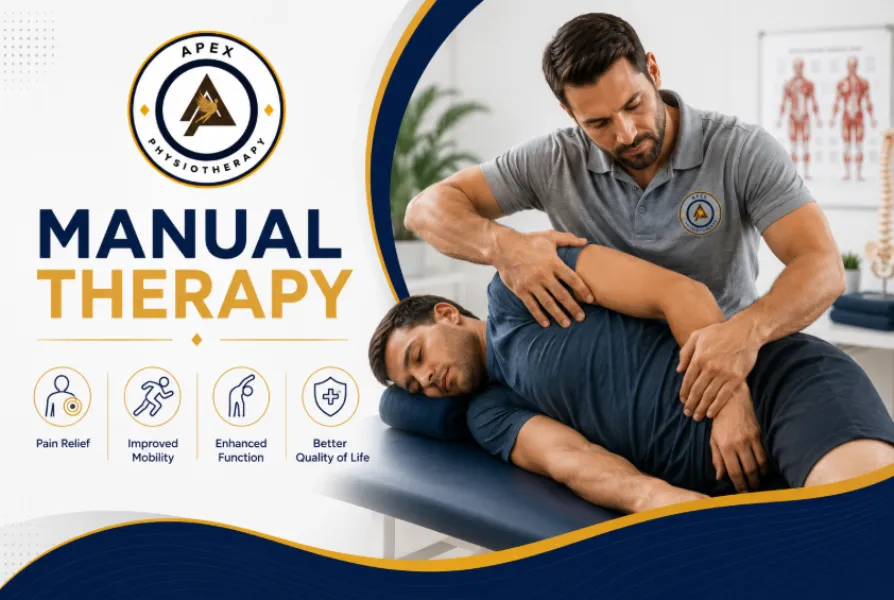
Manual therapy refers to hands-on techniques used by physiotherapists to assess or treat certain movement restrictions and musculoskeletal symptoms. It may include joint mobilisation, soft-tissue techniques, assisted movement, or other clinically selected methods.
At Apex Physiotherapy Clinic, manual therapy is considered as one possible part of a broader rehabilitation programme. Whether it is appropriate depends on the diagnosis, symptoms, medical history, examination findings, and treatment goals.
What Can Manual Therapy Address?
Manual therapy may be used when a patient has:
- Joint stiffness
- Restricted movement
- Muscle tightness
- Certain neck or back complaints
- Shoulder mobility limitations
- Reduced movement after immobilisation
- Soft-tissue discomfort
- Difficulty beginning active exercise because of symptoms
Not every painful condition needs hands-on treatment. In some cases, education, exercise, activity modification, and gradual physical conditioning may be more important.
Manual Therapy and Exercise Serve Different Roles
Manual techniques are generally performed by the physiotherapist, making them a passive part of treatment. Exercise requires active participation and helps develop strength, endurance, balance, and movement confidence.
A patient may feel more comfortable immediately after a manual therapy session, but short-term relief does not necessarily mean that the underlying functional problem has been resolved. If weakness or poor activity tolerance remains, symptoms may return when daily demands increase.
A balanced physiotherapy plan may use manual therapy to make movement more comfortable and then reinforce the improvement through suitable exercises.
How to Know Whether Manual Therapy Is Appropriate
A physiotherapist should complete an assessment before selecting a technique. This may include checking pain behaviour, joint movement, muscle function, neurological symptoms, previous injuries, and medical conditions.
Manual therapy may need to be avoided or modified when there is:
- A recent fracture
- Significant osteoporosis
- Suspected infection
- An unhealed surgical wound
- Acute inflammation
- Certain vascular conditions
- Progressive neurological symptoms
- Medical restrictions following surgery
Patients should disclose relevant diagnoses, medication use, recent procedures, and previous adverse reactions before treatment.
Choosing Manual Therapy in Bellandur
When evaluating manual therapy in Bellandur, patients should look beyond claims of instant correction. A responsible physiotherapy approach should explain why a particular technique is being considered, what it is expected to achieve, and how it fits into the overall rehabilitation plan.
Useful questions include:
- What did the assessment identify?
- Why is this technique suitable for my condition?
- Will treatment include active exercises?
- How will improvement be measured?
- What should I do between sessions?
- Are there symptoms that require medical evaluation?
The response to treatment should be monitored. A technique may be changed if it causes significant or lasting symptom aggravation.
What to Expect After a Session
Some people notice temporary improvement in movement, while others may experience mild short-term soreness. The physiotherapist may prescribe mobility or strengthening exercises to maintain progress and prepare the body for daily activities.
Manual therapy should not be presented as a guaranteed cure or a method for permanently realigning the body. Its value depends on appropriate patient selection and integration with active rehabilitation.
To find out whether hands-on treatment is suitable for your condition, schedule an assessment with Apex Physiotherapy Clinic. The physiotherapist can evaluate your movement, explain the available options, and create a plan that combines manual techniques with appropriate exercise when clinically indicated.
Keywords