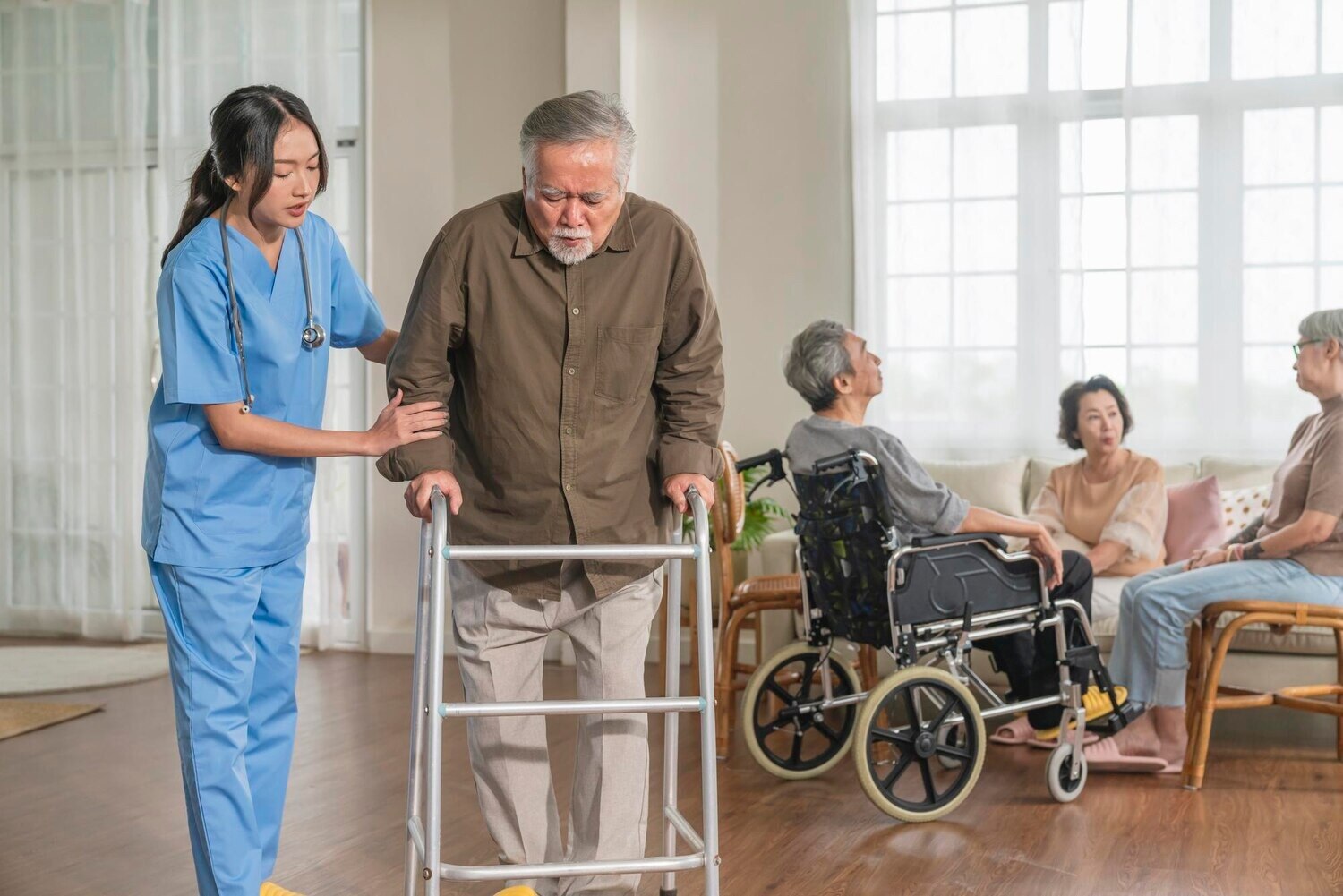
Choosing between hands-on treatment and active rehabilitation depends on what is limiting an older adult: pain, stiffness, weakness, poor balance, low endurance, or loss of independence. By the end, you will know what each approach can achieve, what an assessment should measure, and when a combined plan is safer and more useful than either option alone.
Key takeaways
- Choose active rehabilitation when strength, balance, walking, or independence is the goal.
- Use manual therapy to address specific pain or movement restrictions, not as the entire plan.
- Request a fall-risk, medication, strength, balance, and walking assessment before treatment.
- Avoid forceful manual techniques with fractures, unstable joints, severe osteoporosis, or unexplained symptoms.
Geriatric rehabilitation versus manual therapy: what is each approach designed to do?
Geriatric rehabilitation and manual therapy are not interchangeable. Geriatric rehabilitation is a complete, goal-based programme designed to restore function, independence, safety, and participation in home and community life.
| Approach | What it is designed to do | Typical content |
|---|---|---|
| Geriatric rehabilitation | Rebuild overall physical function and daily independence | Strength, balance, walking, endurance, transfers, stair practice, fall-risk reduction, self-care, and participation in home and community activities |
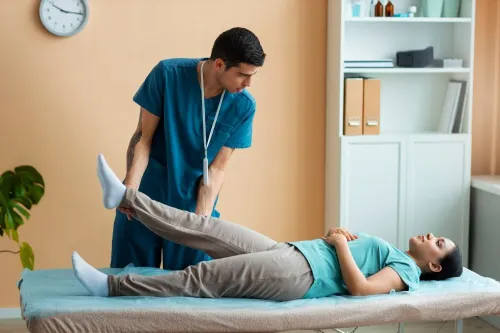
| Manual therapy for older adults | Address a specific painful or restricted area | Hands-on joint mobilisation or soft-tissue treatment for a stiff knee, painful shoulder, restricted hip, or back pain |
| Combined care | Remove a local barrier while rebuilding function | Manual therapy to make movement or exercise easier, followed by active strengthening, balance, walking, or task practice |
Manual therapy can reduce symptoms or improve short-term movement, but it does not by itself build leg strength, cardiovascular tolerance, balance reactions, walking confidence, or independence. Active conditioning is therefore the foundation when function has declined; add manual therapy when a local restriction blocks progress, or use both when pain and deconditioning coexist.
Age alone does not determine the choice. A generally active older adult with a stiff knee may need focused mobility work and strengthening, while someone weakened after hospitalisation needs progressive exercise, walking practice, transfers, and confidence-building. The useful question is not which treatment is more “senior-friendly,” but which problem is limiting safe, meaningful activity.
How a clinician decides what an older adult needs first
Pain relief during a session does not prove that an older adult needs only manual therapy. A clinician looks for reduced strength, balance, walking capacity, confidence, or independence—the signs that call for broader conditioning.
- Observe walking speed, step pattern, turning, walking tolerance, stair ability, and standing and dynamic balance.
- Test sit-to-stand performance, joint range, pain behaviour, lower- and upper-limb strength, and grip strength.
- Ask about dressing, bathing, toileting, transfers, cooking, shopping, and other relevant activities of daily living.
- Record recent falls or near-falls, hospitalisation, frailty, loss of confidence, vision, footwear, mood, cognition, and neurological symptoms.
- Review medicines for dizziness, sedation, blood-pressure effects, or weakness; check lying and standing blood pressure when indicated.
- Inspect home risks such as loose rugs, poor lighting, clutter, and difficult bathroom transfers.
A chair-stand time of 15 seconds or more, or grip strength below 27 kg in men or 16 kg in women, suggests low muscle strength. Gait speed of 0.8 m/s or less indicates poor physical performance. These findings point beyond a painful joint.
The clinician then sets measurable goals: faster chair rises, safer turns, longer walking, or independent stair use. That approach guides geriatric physiotherapy in Bengaluru and older adult conditioning in Bengaluru, where the target is functional progress rather than temporary pain reduction.
When active geriatric rehabilitation is the better starting point
A full conditioning programme should come first after hospitalisation, repeated falls, reduced walking tolerance, difficulty rising from a chair, stair problems, frailty, loss of independence, or recovery from hip fracture, stroke, or another major illness. These problems require more than hands-on relief for one stiff or painful area.
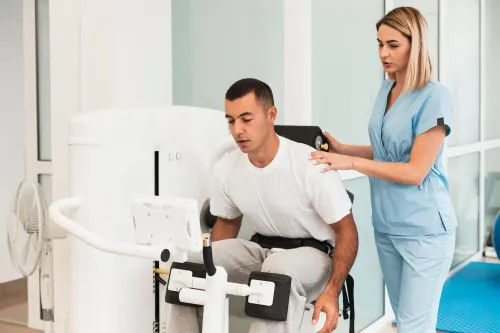
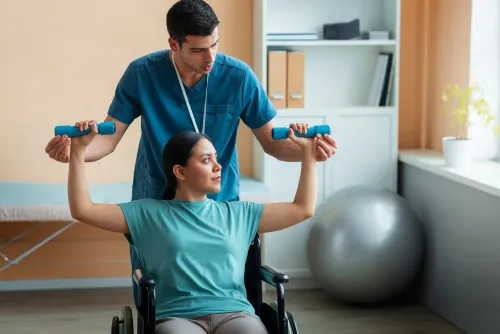
The programme should include repeated sit-to-stands, progressive leg and trunk strengthening, supported and unsupported balance work, stepping and turning, walking intervals, stair practice, reaching, transfers, and rehearsal of tasks that matter at home. Balance exercises must progress enough to train stepping and postural reactions, while remaining appropriately supervised.
Use this checklist when planning older adult conditioning in Bengaluru:
- Match practice to apartment stairs, uneven pavements, bathroom transfers, transport access, heat, and caregiver availability.
- For generally healthy older adults, work towards 150 to 300 minutes of moderate aerobic activity weekly, or 75 to 150 minutes of vigorous activity, plus muscle-strengthening on at least two days.
- If mobility is poor, include multicomponent balance and strength work on at least three days each week.
- Increase challenge gradually: hold less support, reach farther, turn more quickly, walk longer, or rise from a lower surface only when safe.
Geriatric rehabilitation or manual therapy conditioning in Bengaluru should prioritise active training when function or independence has declined. Manual therapy can be added when pain or stiffness blocks exercise, but it cannot replace the strength, balance reactions, walking tolerance, and task practice needed for recovery.
When manual therapy helps—and when it is unsafe as the first step
Manual therapy helps when a local pain or stiffness problem blocks useful movement; it is unsafe as the first step when serious injury, disease, or tissue risk has not been assessed.
A painful stiff shoulder that prevents dressing, a hip or knee restriction that limits walking, or back pain that makes strengthening intolerable may respond to carefully selected hands-on treatment.
Its role is temporary and specific: reduce symptoms or improve short-term movement so you can participate in therapeutic exercise. For knee or hip osteoarthritis, pair it with local strengthening and aerobic conditioning. For low-back pain, use it only within a package that includes exercise.
Pause manual therapy and seek medical assessment or clearance for:
- Unexplained severe pain, a new injury, suspected fracture, fever, acute swelling, or sudden neurological symptoms.
- Unstable osteoporosis, recent surgery, inflammatory disease, or concerns about a joint replacement.
- Fragile skin, sensory loss, inability to report symptoms, or anticoagulant use where bruising risk matters.
Technique, force, positioning, and treatment choice must change when these risks are present. After hip surgery, rehabilitation requires prompt mobilisation and coordinated care, not passive table treatment alone. Following stroke, repetitive practice of transfers, walking, reaching, and daily tasks remains central.
The practical choice in geriatric rehabilitation versus manual therapy is not either-or: manual therapy for older adults can open a movement window, while active rehabilitation builds strength, endurance, balance, and independence. Stop treatment if symptoms worsen rather than improving.
What to ask for in a Bengaluru assessment and treatment plan
Before choosing geriatric rehabilitation or manual therapy conditioning in Bengaluru, ask for an assessment that connects clinic exercises to daily life.
- A history of symptoms, falls or near-falls, hospital stays, surgery, goals, daily routine, home layout, and caregiver support.
- A medication review covering dizziness, sedation, blood-pressure effects, and anticoagulants.
- Gait observation, chair-rise and stair tests, joint range, limb strength, balance, endurance, and relevant daily activities.
- Questions about vision, footwear, confidence, cognition or mood when relevant, bathroom transfers, loose rugs, poor lighting, and other home hazards.
Ask the clinician to state whether the main need is active conditioning, manual therapy to enable exercise, or both. The record should include baseline measures and a review date. A practical plan might specify chair-rise repetitions, walking duration, stair practice, balance tasks, home exercises, supervision requirements, and the measure used to judge progress.
| Option | Main purpose | What to expect |
|---|---|---|
| Active conditioning | Restore function and independence | Progressive strengthening, walking, balance, transfers, and stair practice |
| Manual therapy | Address a painful or stiff restriction | Hands-on treatment used to make movement or exercise easier |
| Combination | Remove a barrier while rebuilding capacity | Manual therapy alongside measurable exercise progression |
At Apex Physiotherapy in Bellandur, Bengaluru, this assessment can connect geriatric physiotherapy in Bengaluru with the person’s apartment, commute, family support, and daily goals. Choose the broader rehabilitation pathway when function or independence has declined; add manual therapy when treatable pain or stiffness blocks that pathway.
Related services
Geriatric Rehabilitation Geriatric Rehabilitation is a specialized physiotherapy service designed to improve mobility, strength, balance, and overall physical function in... View service → |
Manual Therapy Manual Therapy is a specialized hands-on physiotherapy technique designed to reduce pain, improve mobility, restore joint function, and accelerate... View service → |
Frequently asked questions
What is the difference between geriatric rehabilitation and manual therapy?
Geriatric rehabilitation is a goal-based programme for strength, balance, mobility, safety, and independence. Manual therapy uses hands-on techniques to address pain, stiffness, or restricted movement.
How does a clinician decide what an older adult needs first?
The clinician should assess the person’s goals, walking, balance, strength, falls, pain, medical conditions, medications, cognition, and home risks before choosing treatment.
When is active geriatric rehabilitation the better starting point?
Start with active rehabilitation when the main problems are weakness, falls, poor balance, reduced endurance, difficulty walking, or loss of independence.
When can manual therapy help older adults?
Manual therapy can help when a specific joint or soft-tissue restriction contributes to pain or limited movement, alongside exercises that maintain the improvement.
When is manual therapy unsafe as the first step?
Avoid forceful or poorly assessed manual treatment when there is suspected fracture, unstable joint, severe osteoporosis, unexplained severe pain, neurological deterioration, or other red-flag symptoms.
Keywords