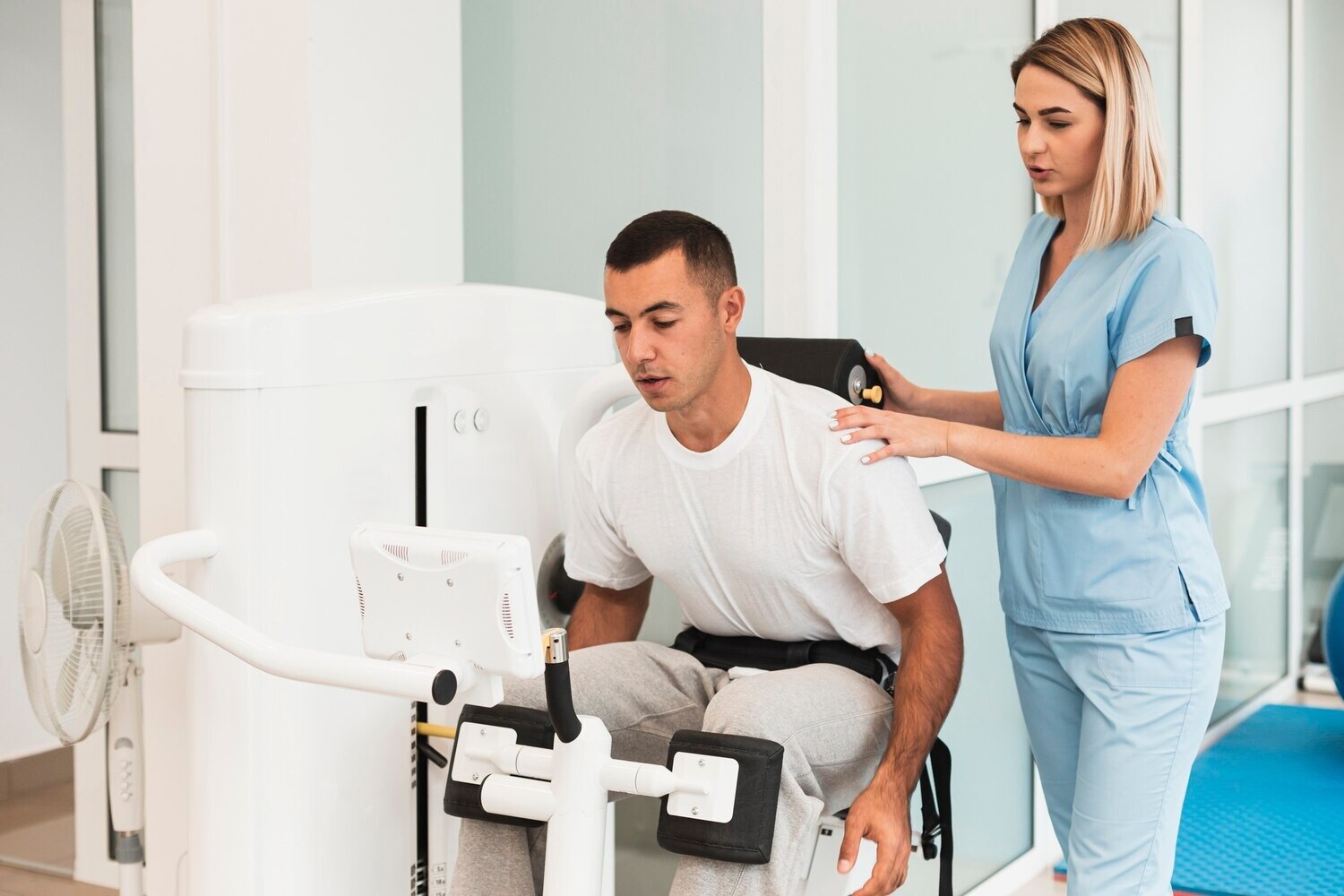
Persistent weakness, breathlessness, poor balance, or reduced walking tolerance after an operation can reflect deconditioning, pain inhibition, medication effects, or a problem that needs medical review. You will learn how clinicians sort those possibilities, set a safe starting level, measure progress, and adapt rehabilitation to the operation you had.
Key takeaways
- Seek medical review for worsening pain, breathlessness, swelling, or declining function.
- Start with short, supported exercises matched to your current capacity.
- Judge progress by recovery between sessions, walking tolerance, strength, and balance.
- Your operation determines movement restrictions, loading limits, and exercise progression.
When Conditioning Problems Need Medical Review
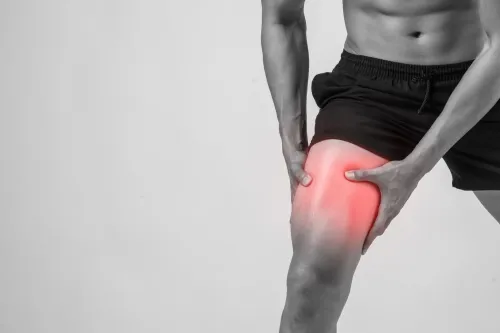
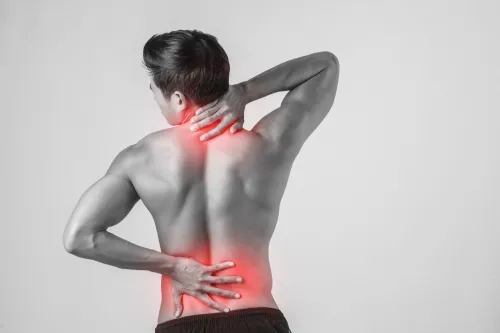
A gradual reduction in strength, stamina, balance, or walking distance is common after surgery, especially after bed rest. Conditioning problems after surgery are more likely when symptoms improve with rest and progress slowly; worsening pain, breathlessness, swelling, or function points to another problem.
Pain inhibition, joint stiffness, anaemia, medication effects, and nerve changes can mimic simple deconditioning.
Seek emergency care for:
- Chest pain, sudden shortness of breath, fainting, or coughing blood
- One-sided calf swelling, warmth, redness, or sudden calf pain
- New weakness, numbness, loss of movement, confusion, or inability to stand
- Heavy bleeding, a wound that opens, or rapidly increasing swelling
Contact your surgeon or physician promptly for fever, chills, increasing redness, pus or foul-smelling wound discharge, pain that is escalating rather than settling, a new clicking or deformity, or a sudden loss of previously regained movement.
These signs can indicate infection, a blood clot, wound failure, recurrent structural injury, or another complication; do not try to exercise through them.
Before routine conditioning is intensified, tell the clinician the operation and date, current pain and swelling, medicines, temperature, wound changes, walking tolerance, and any breathlessness. The operation’s weight-bearing and movement restrictions still apply.
Whether you seek post surgery rehabilitation in Bengaluru or elsewhere, outpatient care suits stable weakness, stiffness, balance loss, or low endurance—not deteriorating systemic symptoms.
What a Rehabilitation Assessment Measures
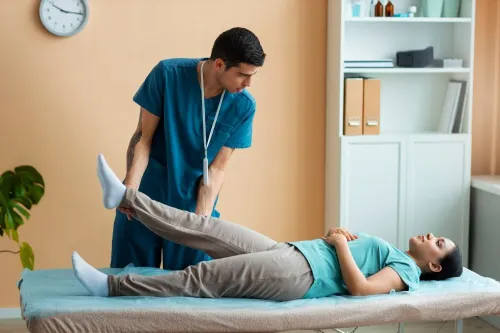
A physiotherapist checks whether reduced capacity comes from deconditioning or from a problem that makes exercise unsafe. The assessment covers the operation and date, weight-bearing status, surgeon’s restrictions, wound protection, pain pattern, sleep, medications, and the tasks you cannot yet complete.
- Measure movement: joint range, swelling, posture, muscle activation, and strength on both sides. Pain that blocks contraction can look like weakness, while new numbness or loss of movement raises concern for nerve or structural involvement.
- Observe function: standing, transfers, walking pattern, stairs, turning, balance, and use of a walking aid. The Timed Up and Go records the time needed to stand, walk, turn, and sit; it helps identify slowness or fall risk but does not diagnose the cause.
- Check exercise response: walking or cycling tolerance, fatigue, breathlessness, heart-rate response, and oxygen saturation when cardiopulmonary symptoms make it relevant. A six-minute walk test measures functional exercise capacity only when you can walk safely and surgical precautions permit it.
- Review daily capacity: bathing, dressing, cooking, work, and household mobility. Ask how symptoms behave during activity and later that day, because delayed pain or exhaustion can reveal an excessive load.
- Match the plan to the procedure: rehabilitation after orthopedic surgery must follow the specific restrictions for a replacement, fracture fixation, spinal operation, cuff repair, or ligament reconstruction. Postoperative physiotherapy for movement problems combines education, active movement, strengthening, functional practice, and a home programme performed correctly between visits.
Deteriorating systemic symptoms, wound changes, or unexplained breathlessness require medical review before conditioning is intensified.
How Exercise Starts When Your Capacity Is Low
A safe starting level is the lowest amount of activity that respects the operation’s weight-bearing and movement restrictions without provoking concerning symptoms. The physiotherapist may begin with one transfer, a few supported steps, or several repetitions rather than a full session, then increase the load only when you complete it with controlled movement.
Progression usually follows these practical steps:
- Walking: move from bed-to-chair steps to short corridor walks, then add distance, turns, stairs, pace, or reduced support.
- Transfers: practise rolling, sitting at the edge of the bed, standing, and chair or toilet transfers before adding repeated sit-to-stands.
- Breathing work: use relaxed diaphragmatic breathing, thoracic expansion, and paced breathing during movement; extend the walking interval as breath control improves.
- Mobility: perform active range-of-motion exercises within the surgeon’s limits, increasing repetitions or movement range without forcing a protected joint.
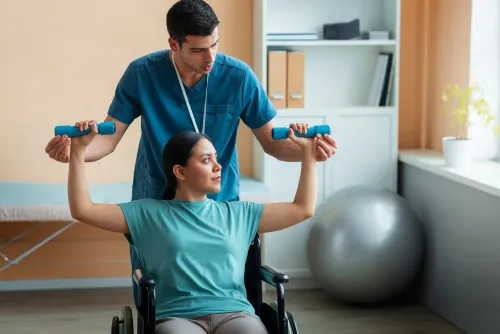
- Strengthening: begin with muscle-setting exercises and assisted movements, progress to active against gravity, then add resistance or functional tasks such as step-ups.
Progress one variable at a time. A home programme keeps the gains between appointments, but incorrect technique or excessive volume can reinforce pain and fatigue, so demonstrate each exercise before repeating it alone.
This approach applies to post surgery rehabilitation for conditioning problems in bengaluru and to postoperative physiotherapy for movement problems elsewhere. If walking tolerance or strength deteriorates instead of improving, pause progression and seek clinical review rather than training harder.
How to Judge Soreness, Fatigue, and Progress
Rehabilitation is helping when you can do more with the same or lower symptoms. Track walking time or distance, transfer ease, stair ability, standing tolerance, sleep, and daily tasks such as bathing and dressing.
A smoother gait, improved range of motion, stronger repeated movements, or a faster Timed Up and Go test also show functional progress.
Compare your response across several sessions rather than judging one difficult day. Conditioning problems after surgery often improve unevenly, especially after poor sleep or increased activity. Record pain from 0 to 10, breathlessness, fatigue, walking quality, and how long symptoms take to settle.
| Exercise response | Acceptable response | Excessive load |
|---|---|---|
| Pain or stiffness | Mild and settling during the session or by the next day | Increasing pain, swelling, or reduced movement afterward |
| Fatigue | Tiredness that resolves with rest and does not disrupt basic tasks | Exhaustion lasting into the next day or preventing normal activity |
| Walking | The planned distance with steady balance and gait | Increasing limp, instability, or shorter distance than before |
| Breathing | Effort that settles during recovery | Breathlessness, dizziness, chest discomfort, or unusual palpitations |
| Strength work | Correct technique through the prescribed range | Compensation, shaking, sharp pain, or loss of control |
During rehabilitation after orthopedic surgery, follow the surgeon’s weight-bearing, range-of-motion, and lifting limits even when you feel capable. Reduce the next session’s duration, resistance, or complexity when symptoms worsen; contact your clinician if the pattern persists.
Why the Operation Changes the Rehabilitation Plan
The operation determines what you may load, move, lift, or protect, so conditioning work must follow the surgeon’s protocol rather than a generic strengthening plan. Early mobilisation usually beats prolonged bed rest, but timing and weight-bearing depend on healing and medical status.
| Operation | Main precautions | Conditioning goal |
|---|---|---|
| Knee replacement | Control swelling; regain extension; follow weight-bearing and flexion limits | Restore quadriceps activation, walking, transfers, and endurance |
| Hip replacement | Follow prescribed weight-bearing and hip-position precautions; avoid dislocation-risk movements | Improve gait, hip strength, balance, and daily mobility |
| Fracture fixation | Respect the fixation-specific weight-bearing and range-of-motion order | Maintain safe fitness while bone healing progresses |
| Spinal surgery | Follow restrictions on bending, lifting, and twisting; monitor neurological symptoms | Build walking tolerance, trunk control, and functional independence |
| Rotator-cuff repair | Protect the repair from active lifting until cleared; use the permitted range only | Preserve safe mobility, then rebuild shoulder strength gradually |
| Ligament reconstruction | Use the brace, crutches, and loading schedule; protect graft healing | Recover joint control, strength, balance, and return-to-sport capacity |
| Abdominal surgery | Protect the incision from strain; pace exertion and coughing; practise breathing and walking | Restore transfers, upright tolerance, walking, and core function |
Local outpatient care is appropriate for stable wounds, known restrictions, persistent weakness, poor walking tolerance, stiffness, or reduced daily activity. For post surgery rehabilitation for conditioning problems in bengaluru, Apex Physiotherapy can adapt exercise to the operative protocol rather than guessing from symptoms.
Choose surgeon or physician review before intensifying post surgery rehabilitation in bengaluru if fever, wound discharge, worsening breathlessness, chest pain, new neurological loss, or rapidly increasing pain or swelling appears.
Related service
Post-Surgery Rehabilitation Post-Surgery Rehabilitation is a specialized physiotherapy program designed to support recovery after surgery, restore mobility, reduce pain, and... View service → |
Frequently asked questions
When do conditioning problems after surgery need medical review?
Seek medical review when pain, breathlessness, swelling, or function worsens instead of improving with rest and gradual rehabilitation.
What does a rehabilitation assessment measure?
It measures strength, stamina, balance, walking distance, movement quality, pain response, fatigue, and the tasks you need to resume.
How does exercise start when postoperative capacity is low?
Exercise begins with manageable movements, supported positions, short sessions, and rest periods, then progresses as your recovery allows.
How does the operation change the rehabilitation plan?
The operation determines movement precautions, weight-bearing limits, wound considerations, permitted exercises, and the pace of progression.
Keywords