
Manual physiotherapy treatment can make a stiff or painful movement easier, but a looser joint after one session is not the same as improved strength, endurance, balance, or fitness. You will be able to judge when hands-on care supports conditioning, what happens during an appointment, and which questions to ask before choosing treatment in Bengaluru.
Key takeaways
- Expect an assessment before hands-on treatment begins.
- Use manual therapy to address mobility limits, not replace exercise conditioning.
- Set measurable goals such as walking farther or reaching overhead.
- Choose treatment that includes reassessment, home exercises, and safe progression.
What happens during manual physiotherapy treatment?
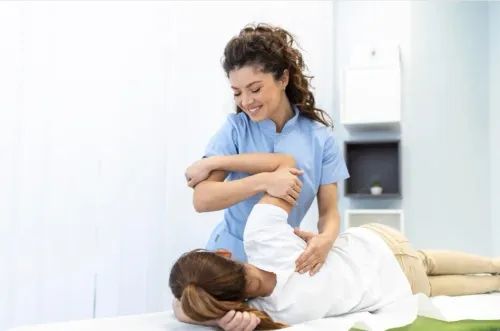
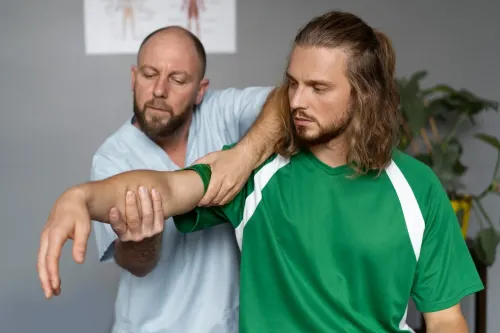
A manual physiotherapy treatment appointment starts with an assessment, not hands-on work. The physiotherapist asks what limits you, checks movement and strength, considers the diagnosis and contraindications, then agrees on a measurable goal such as reaching overhead or walking with less pain.
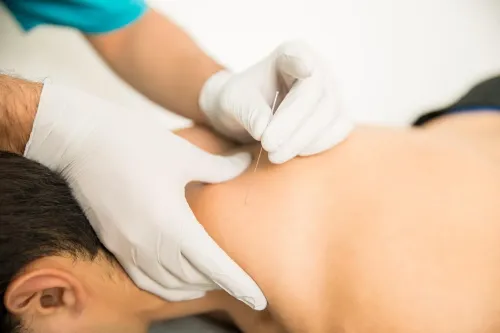
The appointment may involve:
- Discussing symptoms, previous injuries, medical history, and daily or sporting demands.
- Observing movement and testing the relevant joints, muscles, nerves, balance, or strength.
- Applying a selected technique at a specific body region, with controlled pressure, direction, speed, and duration.
- Rechecking movement or pain afterwards and linking any improvement to guided movement or home exercise.
Manual therapy in Bengaluru should be judged by this same process as treatment elsewhere. The location does not create a special physiological version of the treatment; the diagnosis, technique, safety checks, and functional progress matter.
| Approach | What it means | How it differs |
|---|---|---|
| Manual therapy | An umbrella term including joint mobilisation, manipulation, soft-tissue techniques, and therapist-assisted movement | The physiotherapist selects and doses the technique for a clinical goal |
| Massage | Rhythmic or sustained pressure applied mainly to soft tissue | It can be one manual therapy technique, but does not describe the whole appointment |
| Manipulation | A quick, controlled joint movement, sometimes producing a click | It is one technique, not a synonym for all hands-on treatment |
| Passive stretching | The therapist moves a relaxed muscle or joint toward a stretch | You do not actively produce the movement |
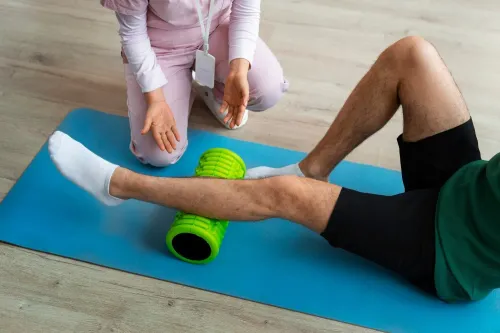
| Exercise therapy | You actively perform strengthening, mobility, balance, aerobic, or functional exercises | It builds conditioning; manual treatment may only make movement easier to practise |
Which mobility restrictions can affect conditioning?
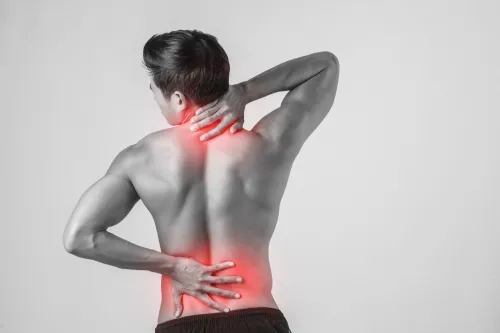
A stiff ankle can shorten your stride; limited hip movement can make squats and stair climbing painful; restricted shoulder or upper-back motion can alter lifting technique. Pain also reduces how much force, speed, or training volume you can tolerate.
| Restriction | Conditioning problem | Possible role of hands-on treatment |
|---|---|---|
| Ankle dorsiflexion | Short stride, poor squat depth, altered landing | Mobilisation or assisted movement may make walking, squatting, or calf loading easier |
| Hip rotation or extension | Compensations during running, lunging, or lifting | Treatment may reduce discomfort and help you practise the intended movement |
| Shoulder or upper-back mobility | Painful overhead work, pressing, swimming, or throwing | Soft-tissue work or joint mobilisation may improve comfortable reach |
| Knee or spinal movement | Guarded stairs, cycling, bending, or resistance training | A targeted technique may make early exercise more tolerable |
Used selectively, manual therapy for mobility aims to transfer a change from the treatment table to a task. Test the result by walking farther, reaching overhead, completing a deeper pain-tolerable squat, or performing a sport drill—not only by measuring joint range.
The manual therapy benefits depend on the diagnosis, irritated tissues, technique, and dosage. A postoperative joint, osteoarthritis, persistent back pain, neurological condition, and acute injury need different decisions. Relief can create room for exercise, but it does not build strength, aerobic capacity, balance, or sport endurance. Those adaptations require progressively loaded active practice.
If movement remains worse during or after training, reduce the load and seek assessment rather than repeatedly relying on passive treatment.
Why hands-on treatment cannot replace conditioning
Manual therapy can reduce pain, ease perceived stiffness, and temporarily increase comfortable movement during or after a session. Those manual therapy benefits may make walking, reaching, or exercising easier, but they do not automatically build muscle, cardiovascular fitness, balance, or movement control.
| Change after hands-on treatment | What it can help you do | What it cannot provide |
|---|---|---|
| Reduced pain or sensitivity | Begin an exercise with less discomfort | Lasting pain control without continued activity |
| Greater passive or comfortable range | Reach, squat, or walk through a fuller movement | Strength across that range |
| Lower muscle guarding | Tolerate loading or practise a task | Improved endurance or coordination |
| Short-term confidence in movement | Attempt a previously avoided activity | Sport, gait, or work readiness |
Conditioning requires a progressive dose. Strength improves when you repeatedly load muscles and increase resistance, repetitions, or task difficulty. Aerobic capacity requires sustained activity; balance and movement control require repeated practice under changing conditions.
The practical test for manual therapy for conditioning in Bengaluru is carryover. After treatment, use the available movement for sit-to-stands, stair practice, walking, lifting, balance drills, or sport-specific work. If a larger range appears only while a therapist moves your limb, it has limited conditioning value.
Hands-on treatment can support the programme by making exercise more tolerable. It cannot replace exercise therapy, task-specific practice, or gradual increases in activity. Progress should show in walking distance, repetitions, lifting ability, balance time, or activity tolerance—not only on the treatment table.
How a physiotherapist selects and progresses treatment
A physiotherapist starts with the task you cannot perform, then identifies whether pain, stiffness, weakness, poor control, or fear is limiting it. The plan should match the diagnosis, tissue irritability, health history, and goal—not a favourite technique.
| Option | What it does | When it applies |
|---|---|---|
| Soft-tissue work | Reduces tenderness or eases movement temporarily | Sensitive muscles or guarded movement limit exercise |
| Mobilisation | Uses repeated, graded joint movement | Stiffness restricts walking, reaching, squatting, or lifting |
| Manipulation | Applies a brief, high-velocity joint thrust | A trained clinician considers it appropriate after screening |
| Stretching | Lengthens a muscle or improves tolerance at a joint range | A specific range restriction blocks a useful task |
| Exercise | Builds strength, endurance, balance, or control | Conditioning and lasting functional improvement are the goal |
Manipulation is not interchangeable with gentle mobilisation. Tell the clinician about fracture risk, inflammatory disease, cancer history, anticoagulant use, major trauma, vascular symptoms, or progressive neurological symptoms before any high-velocity technique.
Progress means more than feeling looser after manual physiotherapy treatment. Track the change between sessions using:
- Pain during the target task and for the following 24 hours
- Joint range measured with the same method
- Walking distance, stair repetitions, lifting load, or sport duration
- Exercise repetitions, resistance, balance time, or movement quality
For manual therapy for conditioning in Bengaluru, judge success by transfer: a table-top mobility gain should improve a real task. Persistent low-back pain requires manual therapy within a package that includes exercise, not as a stand-alone treatment.
How to choose a safe manual therapy plan in Bengaluru
A safe plan starts with a diagnosis, not a standard sequence of hands-on techniques. Ask whether the proposed manual therapy in Bengaluru is appropriate for your condition, what it is intended to change, and how the clinician will adjust it if symptoms worsen.
| Question | Useful answer | Warning sign |
|---|---|---|
| What should I feel? | Mild pressure, stretching, or short-lived soreness can occur; sharp pain, increasing swelling, dizziness, numbness, or weakness is not an acceptable target. | “Pain proves it is working.” |
| What makes it unsafe? | The clinician screens for fracture, infection, blood clot, cancer, severe osteoporosis, recent surgery, neurological changes, blood-thinning medicine, and other condition-specific risks. | Treatment begins without a medical history or examination. |
| What is the measurable goal? | Agree on a baseline and target, such as knee bend, walking time, sit-to-stand repetitions, lifting tolerance, balance time, or pain during a named activity. | The only outcome offered is feeling looser immediately. |
| How does home exercise fit? | Manual therapy may make movement easier, but progressive strengthening, aerobic work, balance practice, and functional loading create conditioning gains. | You are booked for repeated passive treatment without an exercise progression. |
For manual therapy for conditioning in Bengaluru, ask when you should exercise after treatment and what response requires a call or review. NICE recommends manual therapy for persistent low-back pain only within a package that includes exercise; knee osteoarthritis also requires exercise rather than hands-on care alone.
A clinic such as Apex Physiotherapy should be able to explain the technique, dosage, precautions, and reassessment plan in terms you can understand.
Related services
Manual Therapy Manual Therapy is a specialized hands-on physiotherapy technique designed to reduce pain, improve mobility, restore joint function, and accelerate... View service → |
Sports Rehabilitation Sports Rehabilitation is a specialized physiotherapy program designed to help athletes and active individuals recover from injuries, improve... View service → |
Frequently asked questions
What happens during manual physiotherapy treatment?
The physiotherapist first reviews your symptoms, diagnosis, movement, strength, and contraindications. Treatment may then include hands-on techniques linked to a measurable goal, followed by reassessment and exercise guidance.
Which mobility restrictions can affect conditioning?
Pain, joint stiffness, reduced range of motion, muscle tightness, swelling, and poor joint control can limit walking, lifting, running, or strength training. The restriction’s location and cause determine the treatment approach.
Can manual therapy replace conditioning exercises?
No. Manual therapy can help you move with less pain or restriction, but conditioning requires progressive exercises that build strength, endurance, balance, or power.
How does a physiotherapist progress manual therapy treatment?
The physiotherapist compares your movement, pain, strength, and functional performance with the agreed goal. They adjust hands-on treatment and exercise difficulty based on your response and progress.
How do you choose a safe manual therapy plan in Bengaluru?
Choose an assessment-led plan with clear goals, screening for contraindications, informed consent, progress checks, and exercises you can perform safely between appointments.
Keywords