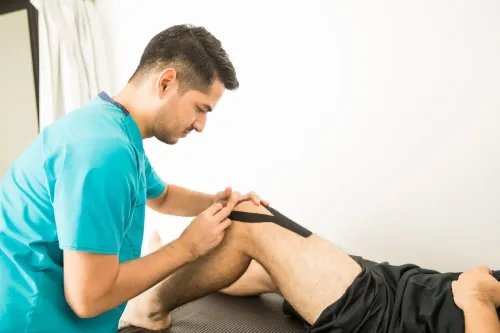
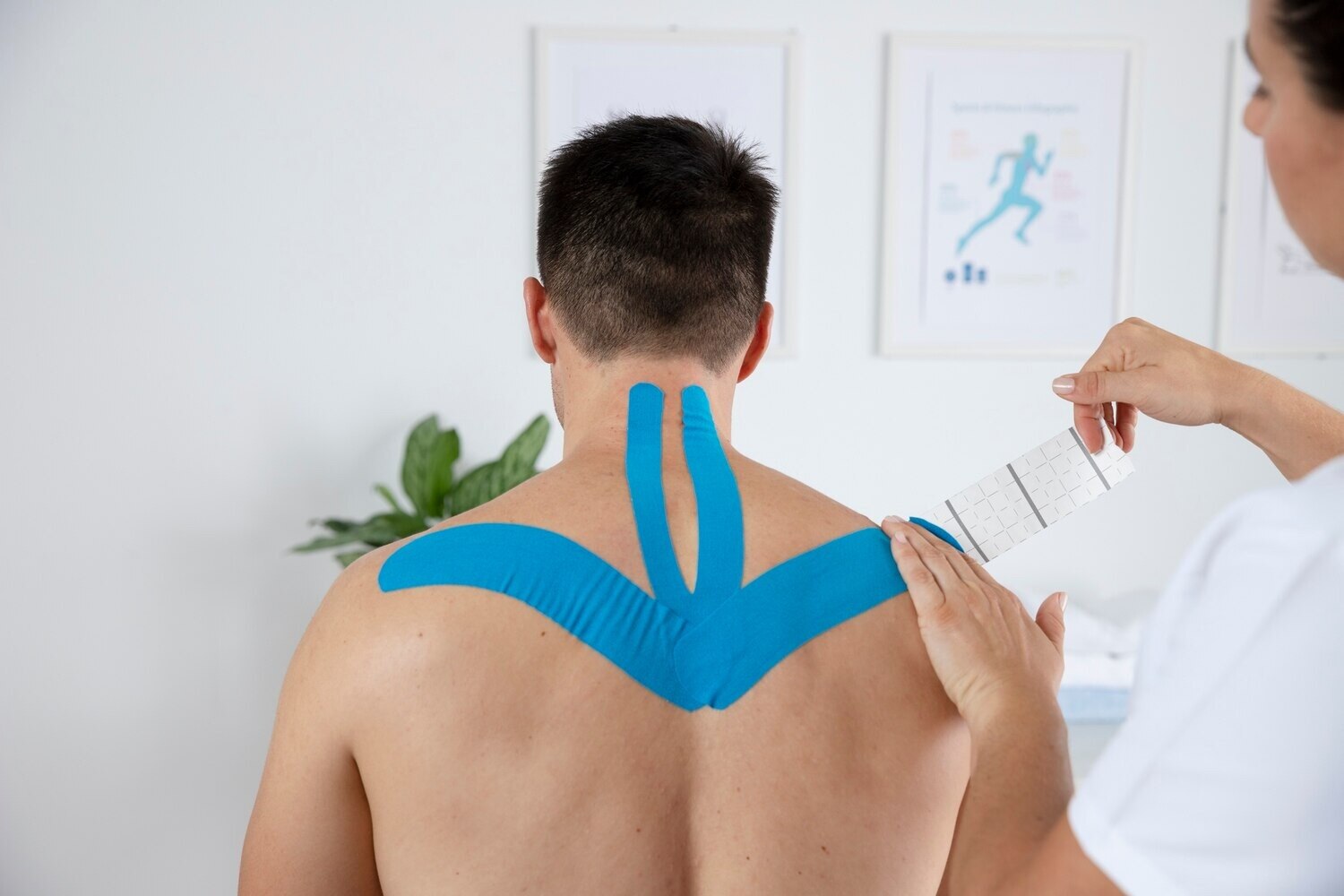
Taping and manual therapy change different things: tape provides external sensory or mechanical support, while hands-on treatment targets movement, stiffness, and symptoms. By comparing their timing, limits, practical risks, and role alongside active prevention training, you can choose the safer next step after exercise instead of using either method to push through an injury.
Key takeaways
- Tape can change joint feedback immediately but does not repair an injury.
- Choose kinesiology tape for temporary support when skin is intact and movement is controlled.
- Use manual therapy for post-training stiffness, pain, or restricted range of motion.
- Seek assessment when pain persists, worsens, or changes how you train or walk.
What changes faster: tape or manual therapy?
Tape changes what you feel and how a joint moves; manual therapy changes pain, stiffness, or range of motion through hands-on treatment. Tape acts as soon as it is applied, while manual therapy acts during or immediately after a session, with effects that may fade as you resume training.
| Option | What changes | Speed and protection after training |
|---|---|---|
| Kinesiology tape | Skin sensation, movement awareness, perceived pain, and confidence; it provides little structural restraint | Immediate feedback or symptom relief; it does not cancel excessive training load or prevent injury by itself |
| Rigid athletic tape | Joint motion, such as limiting excessive ankle or wrist movement | Immediate mechanical restriction; useful only when the restriction matches the diagnosed problem and sport demand |
| Manual therapy | Pain, perceived stiffness, soft-tissue tolerance, and sometimes short-term range of motion | Often immediate but temporary; limited evidence supports using it routinely to prevent a later sports injury |
For taping versus manual therapy in Bengaluru, choose based on the diagnosed problem, previous injuries, sport demands, training load, and your response to exercise—not the city or the technique’s popularity. Manual therapy is more defensible as an adjunct for a movement restriction or diagnosed musculoskeletal problem than as a post-workout ritual.
Neither is a complete sports injury prevention treatment. Strength training, balance or neuromuscular drills, movement retraining, and gradual workload progression provide the durable protection tape and hands-on care cannot. Persistent focal pain, swelling, bruising, instability, locking, inability to bear weight, deformity, or neurological symptoms need assessment rather than repeated taping or massage.
When should you choose kinesiology tape after exercise?
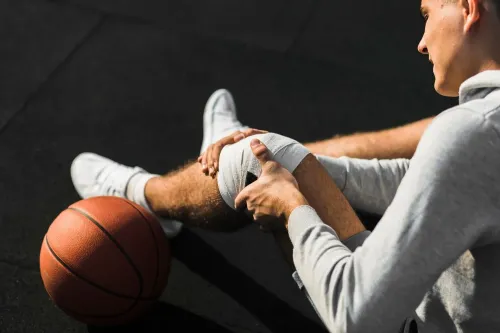
Use kinesiology taping after exercise for mild, familiar symptoms that settle with rest and do not alter how you move. A strip can provide short-term sensory feedback or reduce the feeling of tightness during an ordinary activity. It cannot cancel excessive training load or serve as a stand-alone sports injury prevention treatment.
| Post-training situation | Is kinesiology taping after exercise reasonable? | What to do |
|---|---|---|
| Mild, diffuse muscle soreness | It may help comfort temporarily | Reduce intensity, recover, and resume gradually |
| Mild stiffness without swelling or altered movement | It may provide movement feedback | Pair it with strength, balance, or mobility work |
| Pain that worsens during activity or changes your technique | No | Stop the aggravating activity and arrange assessment |
| Focal pain, swelling, bruising, or loss of function | No | Seek clinical assessment rather than repeated taping |
Arrange assessment instead of applying more tape if you cannot bear weight, a joint locks or gives way, or you notice deformity, numbness, tingling, or weakness. Persistent pain also needs evaluation, especially after a single forceful incident.
Do not use a pain-free tape session as permission to repeat the same hard workout. A clinician should identify the problem and set a plan involving progressive strength, balance or neuromuscular exercises, movement retraining, and workload progression; stretching alone does not replace that work.
How to use tape safely after a workout
Apply tape only to clean, dry, intact skin after your body has cooled and sweat has dried. Wash off oil, lotion, sunscreen and chalk; dry the area completely, and trim excess hair rather than shaving immediately before application. Do not tape over cuts, blisters, rash, infection or unexplained swelling.
| Tape type | What it does | Choose it when |
|---|---|---|
| Kinesiology tape | Provides light stretch and sensory feedback; it does not reliably prevent injury or mechanically stabilise a joint | Mild, short-term symptom relief or movement awareness after training |
| Rigid athletic tape | Restricts selected joint movement, but can loosen with sweat and prolonged activity | A clinician has identified a joint-control problem and taught you the application |
| Ankle brace | Provides more consistent external restraint than kinesiology tape | You need repeatable support during sport or have recurrent ankle instability |
For taping versus manual therapy in Bengaluru, the same safety decision applies anywhere: match the method to the diagnosed problem, sport demands and training load. Kinesiology taping after exercise cannot cancel excessive workload, replace strength and balance training, or guarantee injury prevention.
- Apply a small test strip for several hours if you have sensitive skin or a history of adhesive reactions.
- Check the tape after ten minutes, then during activity. Remove it if you feel burning, increasing itch, numbness, tingling, unusual coldness, skin discolouration or worsening pain.
- Remove it immediately after training if the skin is wet, blistered or painful. Otherwise, follow the product instructions and peel slowly from one edge; stop repeated self-taping and seek assessment for focal pain, swelling, bruising, instability or inability to bear weight.
When does manual therapy after sports training make sense?
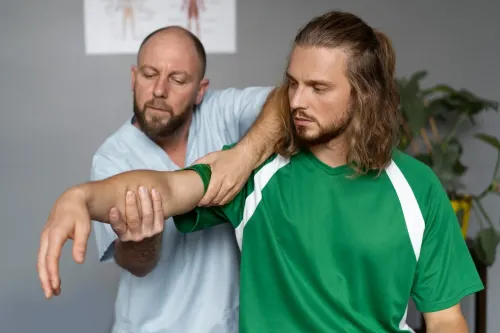
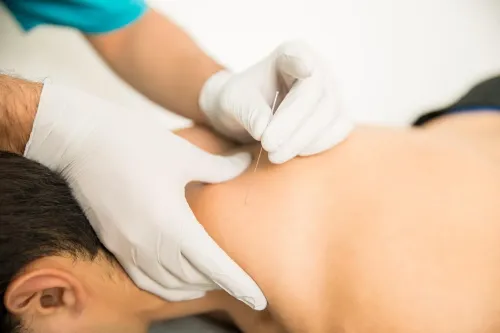
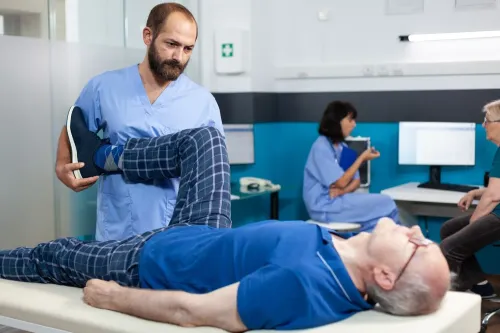
Choose it for a finding, not for the calendar. Manual therapy after sports training makes sense when a clinician has diagnosed a sports-related movement problem: a restriction or pain response that changes how you load a joint. Hands-on mobilisation or soft-tissue work can temporarily reduce pain, perceived stiffness, or limited range, making corrective exercise easier.
It is an adjunct, not a routine reset after every session.
| Option | Immediate role | What it cannot replace |
|---|---|---|
| Massage | May ease perceived tightness or soreness for a short period | Strength, load progression, or assessment of the cause |
| Taping | Adds sensory feedback or external support during movement | Tissue capacity, movement retraining, or a safer training plan |
Neither massage nor taping is a reliable standalone sports injury prevention treatment. Tape cannot cancel an excessive workload, and a looser-feeling muscle after massage does not prove that injury risk has been removed. Evidence that post-training manual therapy prevents a later sports injury remains limited.
Build prevention around:
- Progressive strength for the demands of your sport.
- Balance and neuromuscular drills that improve control.
- Movement retraining for the diagnosed fault.
- Gradual workload progression with recovery.
Use manual therapy to support that plan, then test whether movement and training tolerance improve. If the benefit lasts only hours and the same problem returns, reassessment matters more than booking another passive session. Static stretching alone is not an adequate substitute.
How should a Bengaluru athlete make the decision?
Ask for a diagnosis and a measurable reason before choosing either option. A taping or manual therapy sports injury prevention plan after training in Bengaluru should consider the injured structure, previous injuries, sport-specific demands, recent training load, and your response to exercise.
Ask what short-term change to expect, which exercises will accompany treatment, and when reassessment will occur. Apex Physiotherapy can use that discussion to match treatment to the movement problem rather than applying tape or massage by routine.
| Option | What it changes first | What it cannot do |
|---|---|---|
| Kinesiology tape | Sensory feedback, confidence, or symptoms during movement | Cancel excessive training load or prove that an injury is prevented |
| Manual therapy | Pain, perceived stiffness, or range of motion for a short period | Guarantee injury prevention or show that you are ready for a larger workload |
Build either choice around an active plan:
- Complete progressive strength work for the muscles and joints used in your sport.
- Add balance, landing, cutting, or other neuromuscular drills that match your injury risk.
- Practise movement corrections under gradually increasing speed, resistance, or fatigue.
- Increase training volume and intensity in steps, recording pain, swelling, performance, and next-day response.
- Return for reassessment if pain worsens, swelling persists, the joint gives way, weakness develops, or the planned exercises are not improving control.
In a taping versus manual therapy in Bengaluru decision, choose the option that supports this programme and has a clear stop-or-review point. Neither treatment should become permission to ignore symptoms.
Related services
Kinesiology Taping Kinesiology Taping is an advanced physiotherapy technique designed to support muscles and joints, reduce pain, improve circulation, and enhance... View service → |
Manual Therapy Manual Therapy is a specialized hands-on physiotherapy technique designed to reduce pain, improve mobility, restore joint function, and accelerate... View service → |
Frequently asked questions
What changes faster: tape or manual therapy?
Tape changes sensory feedback and can influence movement as soon as you apply it. Manual therapy can change pain, stiffness, or range of motion during or immediately after treatment. Both effects can fade when you resume training.
When should you choose kinesiology tape after exercise?
Choose kinesiology tape after exercise when you want temporary sensory or movement support, your skin is intact, and you can move without sharp pain, instability, or worsening symptoms.
How can you use tape safely after a workout?
Clean and dry the skin, apply tape without covering wounds or irritated areas, avoid excessive tension, and remove it immediately if you feel numbness, tingling, itching, burning, or increased pain.
When does manual therapy after sports training make sense?
Manual therapy makes sense when post-training stiffness, pain, or restricted range of motion limits normal movement or recovery. A physiotherapist should assess the cause rather than treating symptoms alone.
How should a Bengaluru athlete choose between taping and manual therapy?
Choose taping for short-term support during controlled activity and manual therapy for persistent stiffness, pain, or limited movement. Seek assessment when symptoms affect training, walking, strength, or stability.
Related service
Sports Rehabilitation Sports Rehabilitation is a specialized physiotherapy program designed to help athletes and active individuals recover from injuries, improve... View service → |
Keywords