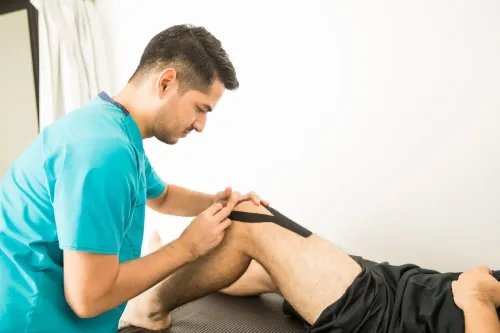
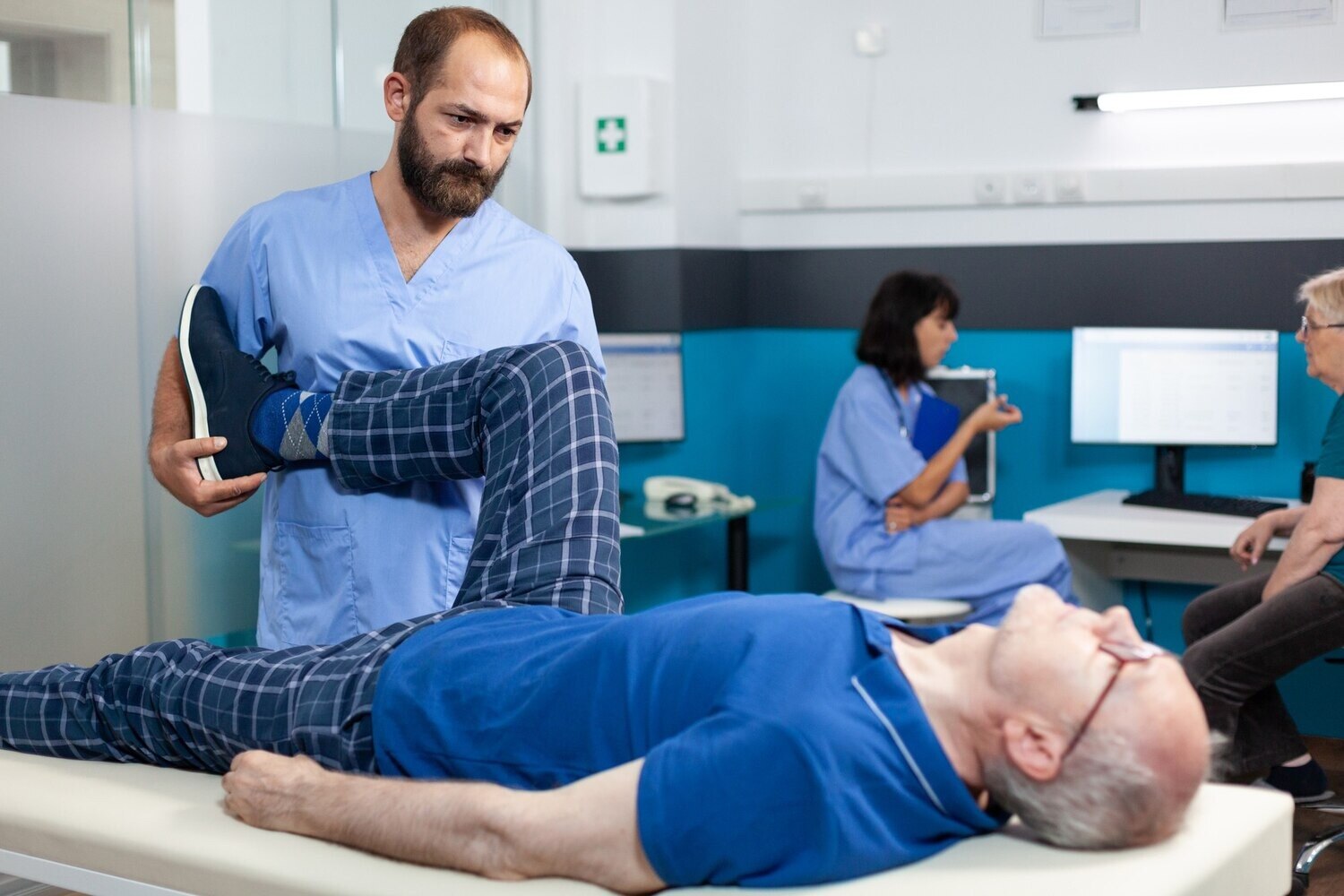
Limited strength can make ordinary pre-surgery exercises too difficult, painful, or unsafe. A suitable plan starts with your actual walking, transfer, balance, breathing, and pain limits, then builds capacity through supported movements and carefully measured progression.
Key takeaways
- Start with surgical clearance, weight-bearing status, restrictions, and a functional baseline.
- Use supported, low-load exercises that build capacity without increasing pain or swelling.
- Match conditioning to the operation, including walking limits and post-operative precautions.
- Stop and contact your care team when symptoms worsen or new warning signs appear.
Start with a Functional Baseline, Not a Standard Exercise Plan
Before conditioning begins, establish what the person can safely do and what the operation will require. Pre-surgery rehabilitation for limited strength starts with surgical clearance, the diagnosis, documented weight-bearing status, movement restrictions, pain and swelling pattern, and the orthopedic team’s contact for worsening symptoms.
1. Record function: walking distance, walking aid, stair ability, transfer method, and sit-to-stand performance. Note how many repetitions are possible and whether technique breaks down.
2. Measure movement and capacity: joint range of motion, limb strength, balance, falls history, breathing symptoms, fatigue, and recovery time after a short walk or simple task.
3. Identify irritability: document pain at rest and during movement, swelling that appears later, night pain, numbness, weakness, dizziness, and the activities that trigger a flare-up.
4. Match the baseline to recovery demands: getting out of bed, using a toilet, managing stairs, protecting the surgical site, using crutches or a walker, and completing essential home tasks.
5. Check factors that limit progress, including frailty, nutrition, body weight, kidney disease, heart or lung conditions, and fear of movement. Protein advice requires medical consideration when kidney function or malnutrition is a concern.
Use these findings to create a short home plan alongside supervised visits. Confirm whether care is clinic-based, home-based, or both, how travel and work affect attendance, and who responds if symptoms worsen. The baseline—not a standard exercise class—determines the starting load.
Low-Strength Exercises That Build Capacity Without a Flare-Up
Begin with movements that reduce the load on the painful or weak area: supported sit-to-stands, bed exercises, isometric contractions, assisted range of motion, and short walking intervals. The aim is repeated practice without a pain or swelling spike, not exhaustion.
| Exercise | How to begin | Adjust when |
|---|---|---|
| Supported sit-to-stand | Use a firm chair with armrests; push through the arms and complete 1–3 sets of 3–8 repetitions | Raise the seat or use more hand support if the knees buckle or pain escalates |
| Bed-based contractions | Tighten the thigh, buttock, or abdominal muscles for 3–5 seconds; repeat 5–10 times | Shorten the hold if the muscle trembles or the joint becomes more painful |
| Assisted range of motion | Use your hands, a strap, or the other leg to move the surgical-area joint slowly | Reduce the range if stiffness becomes sharp pain or swelling increases |
| Walking or cycling | Use a walking aid or stationary cycle for 2–5 minutes, with rests | Add time only when breathing settles and symptoms return to baseline by the next day |
| Light resistance | Start with a band, ankle weight, or very low machine setting for 1–2 sets of 5–10 repetitions | Reduce resistance before reducing movement quality |
For pre surgery physiotherapy conditioning, progress one variable at a time: assistance, repetitions, sets, resistance, or duration. Use the talk test; you should be able to speak in short sentences. Unexplained chest pain, fainting, severe breathlessness, or unusual exercise intolerance requires medical assessment, not progression.
A flare that lasts into the next day means the previous dose was too high. Keep the movement gentle, record the response, and ask your physiotherapist to modify it.
Progress Strength Around the Operation You Are Having
Your operation sets the boundary for progression: build capacity without rehearsing a movement the surgical repair cannot tolerate. Conditioning before orthopedic surgery in Bengaluru should follow the surgeon’s diagnosis, weight-bearing order, and precautions—not a generic strength class.
| Operation | Conditioning focus | Protect against |
|---|---|---|
| Knee replacement | Quadriceps isometrics, supported sit-to-stands, knee range of motion, walking intervals, and stair practice | A large increase in knee swelling or pain that lasts into the next day |
| Hip replacement | Gluteal contractions, hip range within the permitted limit, transfers, walking aids, and stair practice | Unapproved hip positions or loading restrictions |
| Spinal surgery | Short walking intervals, breathing capacity, gentle leg and trunk endurance, and log-rolling or transfer practice | Repeated movements that worsen leg pain, numbness, weakness, or balance |
| Shoulder surgery | Hand, wrist, elbow, posture, scapular control, lower-body strength, and walking | Heavy or painful shoulder loading before clearance |
| Fracture fixation | Isometrics, circulation exercises, unaffected-limb conditioning, transfers, and gait with the prescribed aid | Weight through the fracture site before written clearance |
| Ligament reconstruction | Quadriceps and hamstring activation, knee extension, balance, and controlled walking | Twisting, pivoting, or instability-provoking drills |
Progress one variable at a time: repetitions, resistance, walking duration, or transfer difficulty. Stop progression when swelling, function, or neurological symptoms worsen. Ask who will adjust your home plan if symptoms change and whether the programme covers outpatient visits, supervised home exercise, or both.
Set the Schedule: Weeks, Visits, Walking, and Home Practice
For pre surgery rehabilitation for conditioning limited strength in Bengaluru, start as soon as the surgical plan allows. Several weeks provide time to build walking tolerance, practise transfers, learn walking-aid technique, and rehearse breathing exercises. A shorter programme still helps; do not delay medically necessary surgery solely to pursue longer conditioning.
Arrange supervised physiotherapy once or twice each week at the outset. Increase review frequency when weakness, falls risk, poor endurance, complex weight-bearing restrictions, or symptoms that change quickly make independent practice unsafe. Confirm surgical clearance, the documented weight-bearing status, whether visits are outpatient or home-based, and who to contact if symptoms worsen.
Use this structure between appointments:
- Home exercises: practise the prescribed bed exercises, isometric contractions, assisted movement, and supported sit-to-stands once or twice daily. Stop before pain escalates or fatigue alters your technique.
- Walking: take short, frequent walks rather than one demanding session. Use the prescribed walker or crutches, and stay at an effort where you can speak in full sentences.
- Functional practice: repeat safe bed mobility, chair transfers, stair technique, and dressing strategies that you will need after surgery.
- Progress checks: record walking time, sit-to-stand repetitions, pain, swelling, and recovery time. Send these details to your physiotherapist before the next visit.
Unexplained chest pain, fainting, severe breathlessness, or disproportionate exercise intolerance needs medical assessment, not a harder home session.
Choose Supervision and Know When to Stop
Limited strength, frailty, obesity, neurological symptoms, medical conditions, or poor exercise tolerance warrant closer clinical supervision when they affect transfers, walking, breathing, balance, or recovery between sessions. Pre surgery rehabilitation for limited strength should follow surgical clearance, documented weight-bearing status, and a named plan for responding to worsening symptoms.
Arrange medical review before progressing exercise if you develop:
- Chest pain, fainting, unusual palpitations, or severe breathlessness
- New facial drooping, confusion, one-sided weakness, worsening numbness, or loss of coordination
- New loss of bladder or bowel control, or numbness around the groin
- A painful, swollen calf with sudden breathlessness
- Fever, a rapidly worsening joint, or inability to bear the permitted weight
Apex Physiotherapy can help coordinate pre surgery physiotherapy conditioning with the orthopedic team when neurological findings, obesity-related mobility limits, frailty, or several medical conditions make a generic home programme unsafe.
| Supervision level | When it applies | What changes |
|---|---|---|
| Independent home practice | Stable symptoms, safe transfers, predictable walking, and no red flags | Use written limits, pacing, and a contact person if symptoms worsen |
| Periodic clinic review | Mild frailty, obesity, low endurance, balance concerns, or slow strength gains | Check vital response, technique, walking aid use, and recovery before progression |
| Close or joint medical supervision | Neurological signs, heart or lung disease, uncontrolled diabetes, recent falls, or unclear weight-bearing status | Obtain clearance and coordinate with the surgeon or physician |
| Stop and seek urgent review | Any red-flag symptom above | Do not resume exercise until medically assessed |
Related service
Pre-Surgery Rehabilitation (Prehabilitation) is a specialized physiotherapy program designed to prepare the body before surgery by improving strength, mobility, flexibility,... View service → |
Frequently asked questions
What should you assess before pre-surgery rehabilitation for limited strength?
Record surgical clearance, diagnosis, weight-bearing status, movement restrictions, pain and swelling patterns, and current functional ability before choosing exercises.
Which exercises suit someone with limited strength before orthopedic surgery?
Supported, low-load exercises can build strength and tolerance without a flare-up when they match the diagnosis, restrictions, and current capacity.
How should conditioning change for different orthopedic operations?
Progress strength and movement around the planned operation, its weight-bearing rules, protected tissues, and expected post-operative restrictions.
How often should you attend pre-surgery physiotherapy and practise at home?
Set visits, walking practice, and home exercises around your surgical timeline, recovery capacity, and the progression agreed with your physiotherapist.
When should you stop pre-surgery physiotherapy exercises?
Stop when pain or swelling escalates, movement changes sharply, or a new symptom appears, then contact your orthopaedic team or physiotherapist.
Keywords