Conditioning in neuro rehabilitation is not a generic strengthening routine: the safest choice depends on whether your main limitation is weakness, spasticity, poor coordination, fatigue, dizziness, sensory loss, or unsafe balance reactions. By the end, you will know how to match exercises to the movement problem, judge whether difficulty is being progressed sensibly, and identify when supervised support is safer than independent practice.
Key takeaways
- Train effort, control, transitions and balance—not strength alone.
- Use intervals and stable supports to match conditioning to your movement pattern.
- Stop for worsening coordination, unusual weakness, chest pain or sudden breathlessness.
- Choose supervised neuro conditioning when falls, fatigue or neurological symptoms affect safety.
What conditioning should train when movement is the problem
Conditioning for movement problems means training the effort, control, and transitions that daily life demands—not merely lifting weights. Aerobic capacity can come from walking intervals or cycling; strength can target the legs and arms; trunk control keeps the body aligned; balance reactions help you recover from a nudge.
Gait, transfers, reaching, and task-specific endurance rehearse real actions.
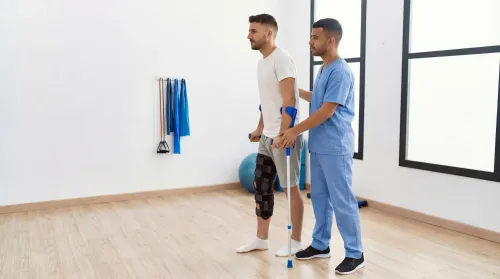
- Weak legs call for supported sit-to-stand, controlled step practice, and gradual strengthening. Stable hand support and a carefully chosen chair height let you train the movement without turning every repetition into a fall risk.
- Poor endurance calls for short walking intervals or cycling with planned recovery. The aim is to repeat useful effort while preserving movement quality, not to continue until fatigue changes your foot placement or posture.
- Passive stretching and general exercise have a place, but neither replaces practising the transitions and movements you need at home, outdoors, or at work.
Diagnosis alone does not select the exercise. Walking and transfer ability, cognition, vision, sensation, cardiovascular status, medication effects, fatigue, and falls history determine the safe starting point and the amount of support.
Someone searching for “neuro rehabilitation for conditioning choices bellandur” should look for an assessment that connects each exercise to a specific movement problem, rather than accepting a generic strengthening routine.
How to match the activity and difficulty to your movement pattern
Choose the activity that exposes the movement problem without overwhelming control. Use supported sit-to-stand or low step-ups for leg weakness; controlled gait and range practice for spasticity; stable, repeated stepping for ataxia; and firm, supported tasks with visual foot checks for impaired sensation or foot drop.
| Movement pattern | Starting choice | Progress when control improves |
|---|---|---|
| Weakness | Supported sit-to-stand or step-ups | Add repetitions, then resistance |
| Ataxia or postural instability | Stable stepping with hand support | Reduce support before changing the surface |
| Parkinsonian slowness | External cueing and large-amplitude movements | Add speed, turning, or task complexity |
| Freezing | Supervised turning and obstacle practice | Add direction changes and dual tasks |
| Low endurance | Cycling or walking intervals | Extend duration and shorten rests |
Tremor needs a stable position, slower speed, and a target that does not require excessive precision. Control comes before heavier resistance: poor alignment under load reinforces unsafe movement.
Add repetitions, resistance, speed, duration, rest periods, support level, surface difficulty, and perceived exertion one variable at a time; unstable surfaces and conversation or counting tasks come later.
Do not rely on heart rate alone if you take beta-blockers or have autonomic dysfunction. For heat-sensitive multiple sclerosis, use cooling, hydration, shorter intervals, and longer rests. Vestibulo-ocular deficits call for gaze stabilisation, while orthostatic symptoms require slow, careful upright transitions.
These principles make conditioning for movement problems more specific than generic exercise, whether you are comparing options for neuro rehab conditioning Bellandur or elsewhere.
Low-risk conditioning examples for walking, transfers, and balance
Use a stable chair, a clear floor, and planned support before adding speed, distance, or complexity. These low-risk examples work when a clinician has matched the activity to the person’s walking, sensation, vision, cognition, fatigue, and falls history.
1. Practise sit-to-stand from a firm chair with feet evenly placed, knees aligned, and a controlled forward lean. Decide in advance whether hands will push from the armrests, reach for a walker, or remain free; do not pull on an unstable table.
2. Begin gait with supported stepping, overground walking, treadmill work, or short walking intervals only when foot placement stays safe and the person can recover from a small error. For foot drop or reduced sensation, check each foot visually, wear secure footwear, and choose an aid that fits the actual home, pavement, or stair environment.
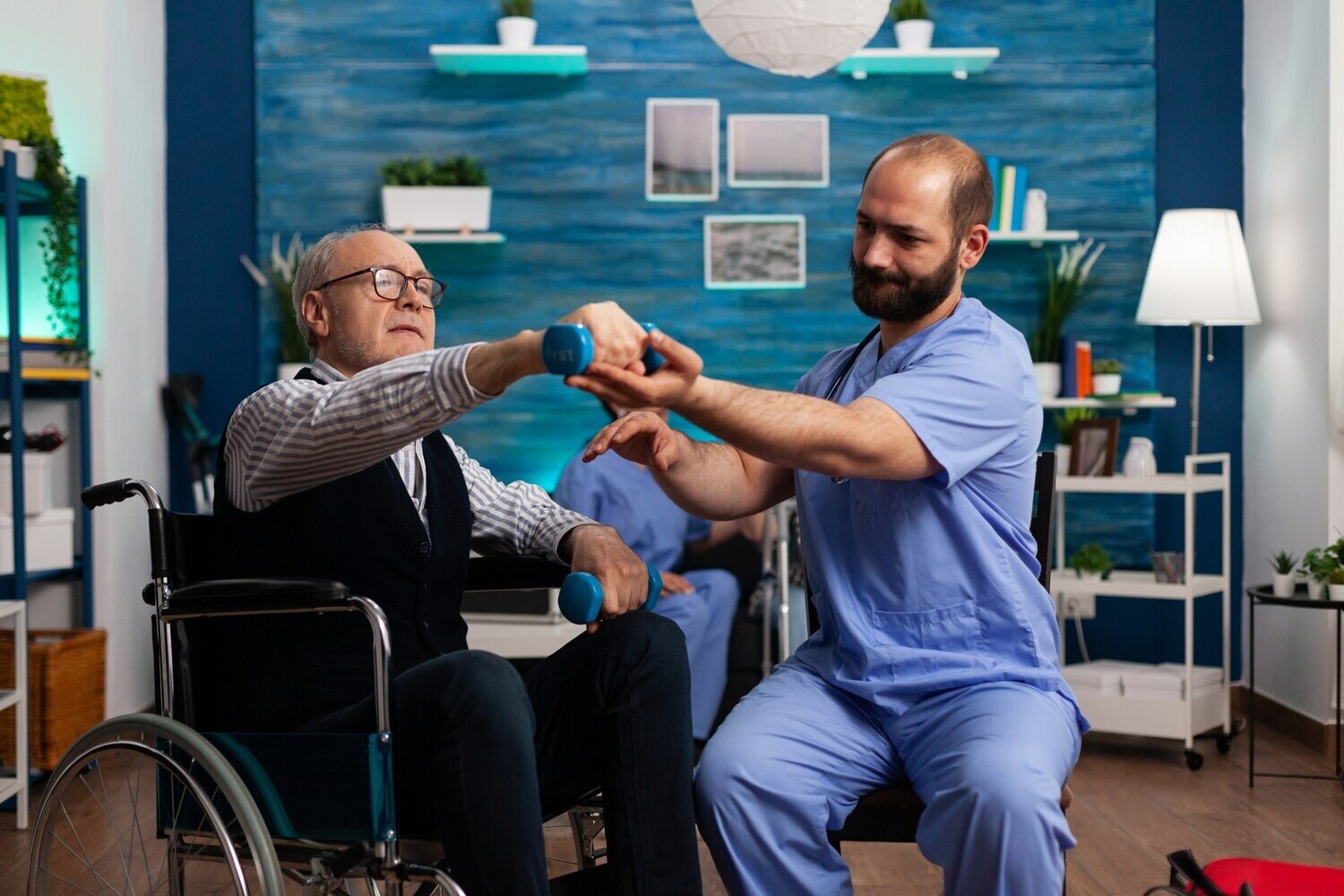
3. Train the upper limbs and trunk while seated or supported: reach to targets, shift weight within control, rotate the trunk slowly, or place light objects on a shelf. Stop before the person leans beyond their ability to return upright.
4. Start balance with a stable stance and hand support. Progress to a narrower base, head movement, turning, or one simple cognitive task only after the easier position remains controlled.
5. Parkinson’s conditioning must test turning, getting up at night, carrying an object, and medication “off” periods, not just treadmill speed. After brain injury, avoid combining obstacles, conversation, fast walking, and rapid direction changes until basic walking is reliable.
Whether choosing neuro rehabilitation in Bengaluru or neuro rehab conditioning Bellandur, match support to the person’s real environment and current control.
How to screen for risk and recognise useful versus dangerous fatigue
Before conditioning for movement problems, check falls history, blood-pressure response, dizziness, cardiac or respiratory limits, seizures, reduced sensation, vision, osteoporosis, medication effects, headaches, cognitive fatigue, and heat sensitivity. A search for neuro rehabilitation for conditioning choices Bellandur should not replace this individual screening.
- Record how the person stands, walks, transfers, and recovers after effort.
- Check whether medication timing, beta-blockers, sedatives, or blood-pressure drugs alter alertness, balance, or heart-rate response.
- Use cooling, hydration, shorter intervals, and planned rests when heat worsens weakness, vision, balance, or walking.
Upright exercise deserves extra caution after spinal-cord injury or with severe autonomic impairment. Rise gradually and monitor for orthostatic hypotension: dizziness, blurred vision, unusual weakness, or a blood-pressure drop after standing.
With injury at or above T6, sudden headache, flushing or sweating above the injury, nasal congestion, blurred vision, or a marked blood-pressure rise signals possible autonomic dysreflexia; stop and seek emergency care.
| Productive fatigue | Dangerous fatigue |
|---|---|
| Effort settles during the planned recovery period | Symptoms keep intensifying during recovery |
| Movement quality stays stable | Form deteriorates, foot placement worsens, or coordination declines |
| Breathing returns toward baseline | Chest pain, fainting, or unusual breathlessness appears |
| No new neurological symptom | New weakness, sensory loss, severe headache, or confusion develops |
Do not hold your breath, ignore recovery time, exercise through deteriorating form, practise unsupported balance alone, or judge success only by weight lifted. Stop and obtain medical assessment for repeated falls, prolonged confusion, worsening coordination, or any substantial new change in symptoms.
When supervised neuro conditioning is safer than a gym or home routine
Supervision is safer when a neurological movement problem makes errors hard to predict, recover from, or notice. A gym offers equipment and independence, but staff may not monitor turning, fall recovery, dual-task walking, blood-pressure changes, or medication “off” periods.
Home exercise gives repetition and convenience. It becomes unsafe when your layout lacks clear support, the exercise has no progression for resistance, speed, duration, and rest, or fatigue changes your form.
| Option | Strength | Main gap |
|---|---|---|
| Gym programme | Equipment and independent training | Fall recovery, turning, dual-task walking, blood pressure, and medication timing may go unobserved |
| Home routine | Convenient repetition | Requires a safe layout, correct support, and planned progression |
| Fitness class | Aerobic and social training | Pace may exceed visual, cognitive, sensory, or balance capacity |
| Sports conditioning | Performance-specific drills | Targets sporting demands, not neurological movement control |
Ask how the first assessment will examine walking and transfers, falls, cognition, vision, sensation, fatigue, medications, cardiovascular status, and recovery response. Group exercise is a poor starting point when instructions are missed, foot placement deteriorates, dizziness follows standing, or you cannot stop safely.
For neuro rehabilitation in Bengaluru, including neuro rehabilitation for conditioning choices Bellandur, Apex Physiotherapy is worth considering when you need individual assessment, graded task practice, and supervision rather than a generic prescription. Neuro rehab conditioning Bellandur is suitable only when the programme matches your risks and goals, not simply because the clinic is nearby.
Related service
Neuro Rehabilitation Neuro Rehabilitation is a specialized physiotherapy treatment focused on improving movement, strength, balance, coordination, and independence in... View service → |
Frequently asked questions
What should conditioning train when movement is the main problem?
It should train aerobic capacity, strength, trunk control, balance reactions, effort management and the transitions used in daily life.
How do you match conditioning difficulty to a movement pattern?
Match the activity to your safest movement method, then adjust speed, resistance, duration, support and rest while preserving control.
What are low-risk conditioning options for walking, transfers and balance?
Walking intervals, seated or recumbent cycling, repeated sit-to-stand practice, supported stepping and balance drills near a stable surface are practical options.
How can you tell useful fatigue from dangerous fatigue?
Useful fatigue settles with rest and does not change technique. Stop when coordination worsens, weakness increases, balance deteriorates or symptoms such as chest pain or sudden breathlessness appear.
When is supervised neuro conditioning safer than a gym or home routine?
Supervision is safer when you have recent falls, unpredictable balance, neurological weakness, abnormal fatigue, difficulty transferring or symptoms that change during exercise.
Keywords