Returning to sport after surgery requires more than reduced pain or a fixed number of weeks. You need a staged plan that respects the repaired tissue, measures readiness at each step, and builds from protected movement to competition demands without confusing fitness with healing.
Key takeaways
- Follow the surgeon’s protocol before increasing running, jumping, or resistance.
- Progress when swelling, motion, strength, and movement quality meet agreed milestones.
- Separate normal training soreness from worsening pain, swelling, or wound changes.
- Use sport-specific testing and shared clinical decisions before returning to competition.
How the Surgical Procedure Determines Your Starting Point
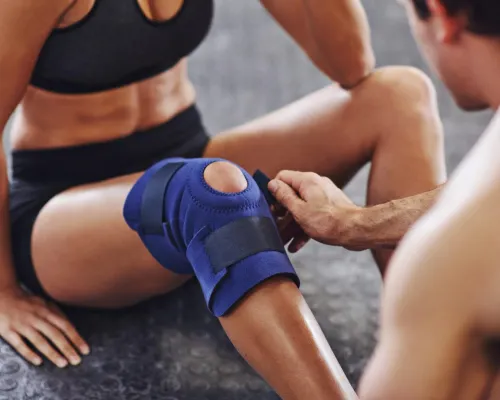
The operation sets your first safe load, not the calendar. In post surgery rehabilitation for sports conditioning in bengaluru, the surgeon’s protocol must be combined with wound status, pain, swelling, joint motion, strength, movement quality, and sport demands. A comfortable joint does not prove it can tolerate sprinting or repeated jumps.
- ACL reconstruction: restore full extension, control swelling, rebuild quadriceps strength, then add running, jumping, cutting, and reactive drills. Graft protection and strength deficits determine progression.
- Meniscus repair: weight-bearing, deep knee flexion, squatting, and rotation may be restricted according to tear location and repair technique. A partial meniscectomy often allows faster loading but creates different long-term joint-loading concerns.
- Rotator-cuff repair or shoulder stabilisation: protect the repair from resisted lifting and vulnerable overhead positions before restoring strength, throwing mechanics, and contact tolerance.
- Achilles repair: protect tendon length and calf loading, then rebuild walking, calf strength, elastic power, running, and jumping in stages.
- Ankle or fracture fixation: respect bone and hardware loading limits before impact work. Cartilage procedures also require procedure-specific limits on weight-bearing and impact.
A safe sequence is protection, range of motion, basic strength, controlled aerobic work, linear running, acceleration and deceleration, change of direction, jumping and landing, reactive drills, sport-specific practice, and competition. Progress only after measurable reassessment: motion, dynamometry or strength testing, single-leg control, task or hop performance, and next-day symptom response.
The written plan should state what earns the next stage.
Use Healing Milestones to Decide When You Can Progress
A calendar date cannot clear you for sport. Before progressing, your surgeon must confirm that the repair, fixation, tendon, ligament, cartilage, or bone has reached the required biological stage; fitness can return faster than healing.
Before high-load work, confirm all of these with your physiotherapist:
- The wound is closed, pain stays at 0–2 out of 10 during exercise, and swelling has not increased the following morning.
- The operated joint has the range of motion required for the next task, without a blocked or unstable feeling.
- Strength testing shows at least 90% of the opposite side where that comparison is valid, with controlled single-leg squats, step-downs, or upper-limb movements.
- You can repeat the current workload for several sessions without worsening symptoms or losing movement quality.
- The surgeon has approved the specific load, especially after fracture fixation, tendon repair, cartilage surgery, or shoulder stabilisation.
Use the task-specific gates below rather than “feels fine”:
| Action | Objective gate before progression | What failure suggests |
|---|---|---|
| Running | Pain-free walking, minimal swelling, adequate single-leg control, and strength testing near 90% symmetry | The joint or repair is not tolerating impact |
| Jumping | Controlled landing without pain, collapse, or loss of balance; hop testing is acceptable when prescribed | Poor force absorption or unresolved weakness |
| Cutting | Linear running and braking are symptom-free before planned direction changes | Insufficient deceleration control |
| Throwing | Full permitted motion, shoulder-blade control, strength, and graded throwing tolerance | The shoulder is not ready for repeated overhead load |
| Heavy lifting | Surgeon-approved loading range and several symptom-free sessions at lower loads | Excessive tissue stress |
Postoperative physiotherapy in Bengaluru should document these results and progress one demand at a time.
Build Fitness Without Overloading the Repair
Conditioning does not mean training through a restriction. In post surgery rehabilitation for conditioning, choose exercise that keeps the repaired tissue within its permitted range, load, and position. A surgeon’s protocol may allow cycling but prohibit deep knee flexion, or permit walking but restrict running.
Use perceived exertion, heart rate, or timed intervals to train the cardiovascular system without disguising a load problem.
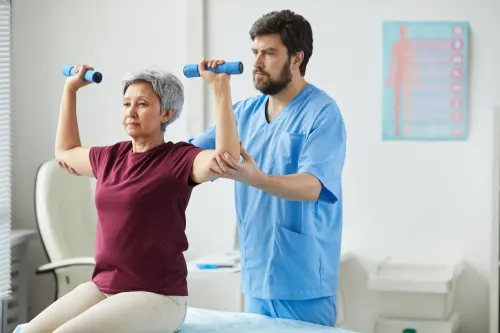
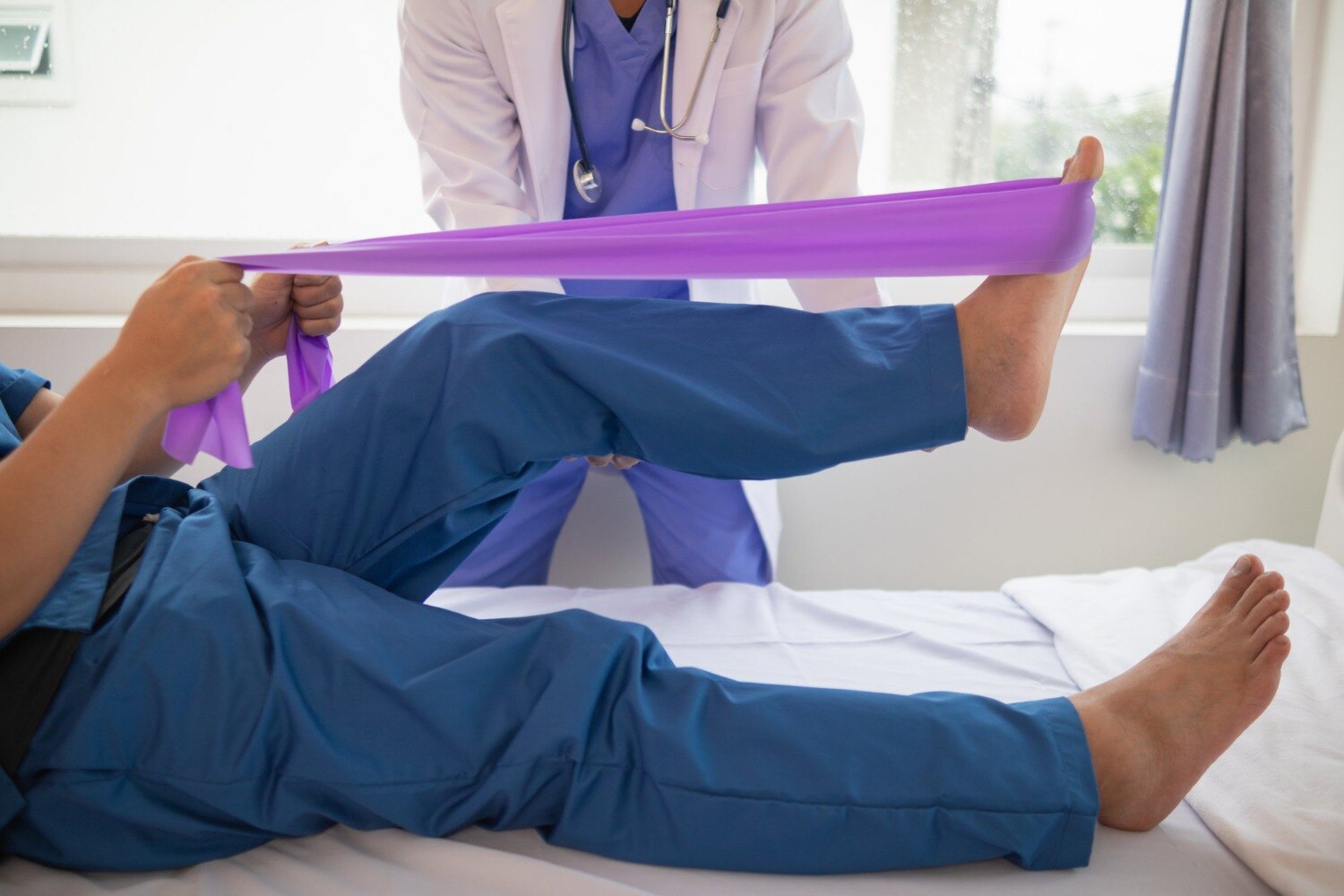
- Restore capacity with approved isometrics, gentle range-of-motion work, and strength training for unaffected limbs. Maintain trunk and hip strength when the operated area allows it.
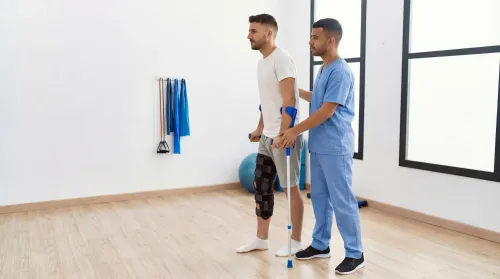
- Add controlled aerobic work such as walking, stationary cycling, pool exercise, or an upper-body ergometer only after the movement and weight-bearing limits permit that option.
- Build duration before intensity. Increase one variable at a time, keeping technique steady and avoiding fatigue that causes limping, compensation, or loss of joint control.
- Progress to acceleration, deceleration, jumping, cutting, throwing, or heavy lifting only after the relevant strength and movement tests meet the planned criteria.
Judge each session by its response, not just how it feels during exercise. Swelling, reduced range of motion, worsening gait, or pain that remains higher the next day means the recent dose was excessive; reduce volume or return to the previous stage.
A written plan should record exercise dose, exertion, symptoms, strength, and movement quality so fitness improves without gambling with the repair.
Recognise Training Errors, Normal Responses, and Warning Signs
Mild soreness after a session is acceptable when it stays near the operated area, does not alter your movement, and returns to your usual level by the next morning. A load problem is different: pain remains elevated, swelling increases, motion decreases, or your gait worsens after training.
Use this response check after every new exercise or increase in workload:
- Continue at the same dose when symptoms settle within the expected recovery period and you retain the range of motion and movement quality you had before training.
- Reduce repetitions, resistance, speed, or complexity when swelling is greater the next day, pain lasts into the following day, or you lose previously gained motion.
- Stop the drill when technique breaks down from fatigue, the joint gives way, a repaired area feels unstable, or a sudden pop causes immediate pain or loss of function.
- Do not progress sports conditioning after surgery by chasing only pain-free movement; repeated jumps, sprinting, cutting, or late-session practice can expose deficits in strength, power, balance, and fatigue tolerance.
Contact your surgical team promptly for increasing redness, wound drainage, fever, wound separation, new numbness, or inability to bear weight. Seek emergency care for chest pain, sudden breathlessness, or a painful swollen calf.
Follow the surgeon’s restrictions even if symptoms feel good; meniscus repair, tendon repair, fracture fixation, and cartilage procedures can fail under loads that feel tolerable. Record pain, swelling, motion, exertion, and next-day function so your clinician can adjust the written progression plan.
Make Return to Competition a Shared, Measured Decision
Do not enter unrestricted competition because the calendar says you are ready or because practice felt good once. Progress when you, your physiotherapist, surgeon, and coach agree that the repaired structure tolerates the sport’s speed, contact, fatigue, and workload.
1. Confirm the surgical restrictions are cleared. Ask the surgeon to specify whether contact, pivoting, overhead work, throwing, sprinting, or heavy lifting remains restricted.
2. Check measurable capacity, not confidence alone. Record full or surgeon-approved range of motion, pain and swelling response, dynamometry or equivalent strength results, and hop or task-test performance where appropriate.
3. Reproduce competition demands. A footballer needs repeated acceleration, braking, cutting, and contact; a cricketer may need throwing and sprinting; a badminton player needs lunges and reactive changes of direction. Complete these drills at increasing speed and complexity.
4. Test fatigue tolerance. Repeat the key actions late in practice and check technique, limb control, exertion, pain, and swelling later that day and the next morning. A knee that passes one jump but collapses during repeated jumps is not ready.
5. Confirm psychological readiness and a written workload plan. Set training minutes, intensity, rest, contact exposure, and the conditions for stepping back; document what happens if symptoms exceed the agreed limit.
For return to sport rehabilitation in Bengaluru, ask whether reassessments and progression decisions are recorded rather than relying on passive treatment or “feels fine.” Apex Physiotherapy can be useful when its assessment links test results to independent training and sport re-entry, with the surgeon’s restrictions respected.
Related services
Sports Rehabilitation Sports Rehabilitation is a specialized physiotherapy program designed to help athletes and active individuals recover from injuries, improve... View service → |
Post-Surgery Rehabilitation Post-Surgery Rehabilitation is a specialized physiotherapy program designed to support recovery after surgery, restore mobility, reduce pain, and... View service → |
Frequently asked questions
How does the surgical procedure determine rehabilitation starting points?
The procedure, repaired tissue, fixation method, and surgeon’s restrictions determine safe early movement, loading, and exercise choices.
When can you progress sports conditioning after surgery?
Progress after meeting healing milestones for wound status, pain, swelling, joint motion, strength, and movement quality—not simply because time has passed.
How can you build fitness without overloading a surgical repair?
Use the surgeon’s restrictions and increase conditioning in measured stages, choosing exercises that develop fitness without exceeding the repair’s current load tolerance.
Which symptoms indicate a training problem or warning sign?
Increasing pain, swelling, loss of motion, altered movement, wound changes, or symptoms that persist after training require a rehabilitation review.
Who decides when you can return to competition?
You, your surgeon, and your physiotherapist should combine healing status, strength, movement tests, sport demands, and training response before making the decision.
Keywords