After an injury, complete rest can protect an irritated structure for a short time but leave you stiff, weak, and unprepared for sport. You will be able to identify red flags, choose relative rest when appropriate, build a graded conditioning plan, and judge whether you are ready to return to play.
Key takeaways
- Use relative rest for 24 to 72 hours, not complete inactivity.
- Treat worsening pain, swelling, weakness, or instability as injury warning signs.
- Rebuild capacity with graded loading before returning to full sport.
- Return only when sport-specific drills are pain-free and controlled.
What should you do during the first 24 to 72 hours?
During the first 24 to 72 hours, choose relative rest rather than complete inactivity. The sports injury rehabilitation versus rest decision is simple: stop sprinting, jumping, cutting, contact, heavy resistance, and any movement that increases symptoms, while keeping pain-free movement and safe low-impact activity such as easy walking or cycling.
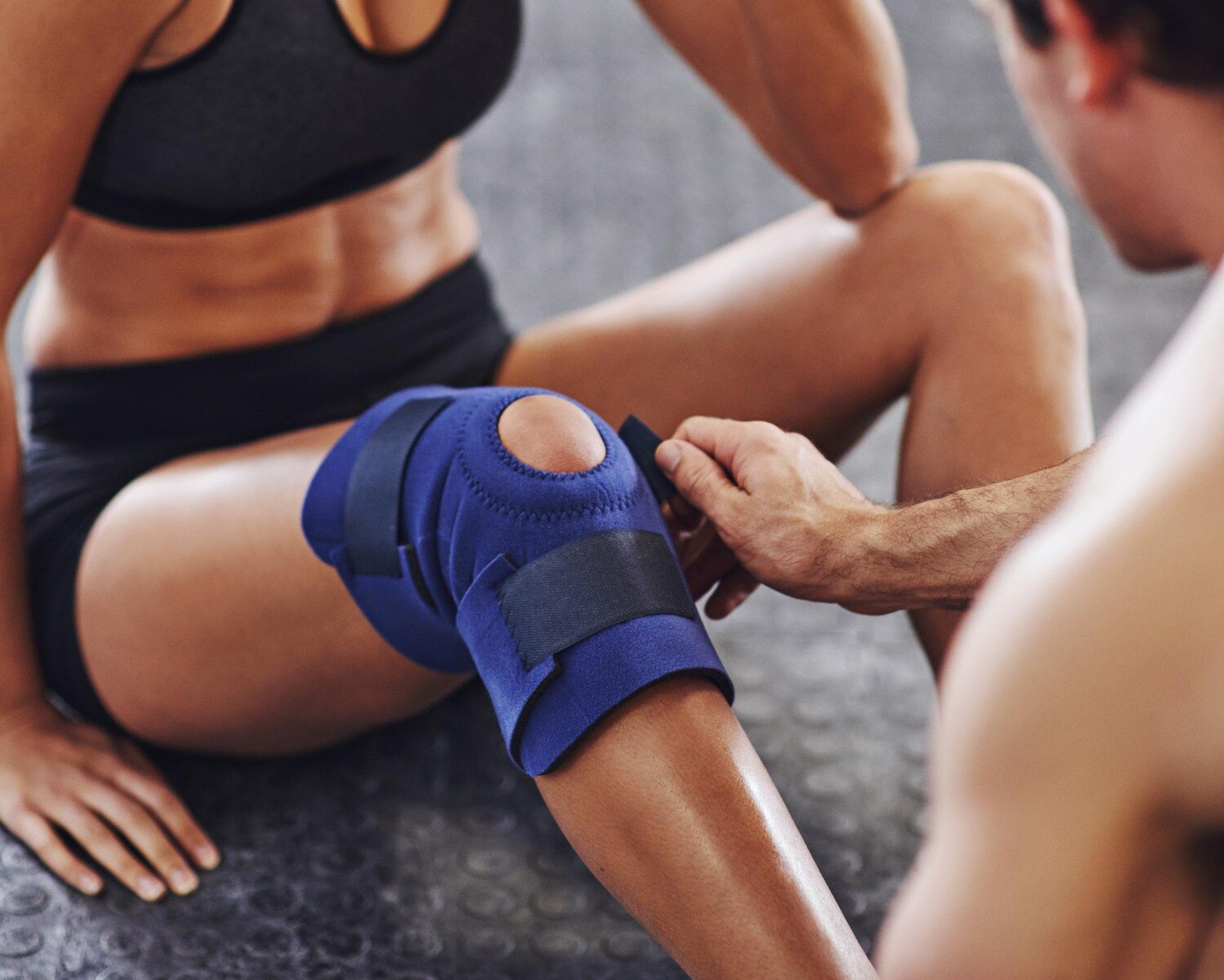
- Apply PEACE: protect the area from aggravating loads; elevate it when practical; use appropriate compression without causing numbness, tingling, or colour change; educate yourself about the injury; and avoid unnecessary anti-inflammatory medication unless a clinician advises it. PEACE is a framework, not a rigid timetable.
- Once serious injury has been excluded and symptoms remain controlled, begin gentle range-of-motion work. Ask when to rehabilitate a sports injury based on the diagnosis, not the calendar; steadily worsening pain, swelling, or loss of function means reassessment.
- Seek urgent medical assessment for deformity, suspected fracture, inability to bear weight, rapidly increasing swelling, numbness, a cold or discoloured limb, a locked joint, major instability, infection signs, or head-injury symptoms.
For an ankle injury, the Ottawa Ankle Rules flag clinician-led radiographs when there is bone tenderness at specified ankle or mid-foot landmarks, or inability to take four steps both immediately and during assessment. These rules support examination; they do not replace it.
A suspected concussion requires no same-day return to play. Follow a medically guided return-to-learn and return-to-sport process instead.
Is this normal soreness, or an injury that needs rehabilitation?
Diffuse muscle soreness is usually felt across a muscle group, eases as you warm up, and improves within 24 to 48 hours. Focal pain, bruising, swelling, instability, locking, strength loss, altered gait, or pain that worsens during activity points to injury.
| Problem | Typical concern | Likely next step |
|---|---|---|
| Acute ankle sprain | Swelling, tenderness, reduced balance | Graded mobility, strengthening, balance work; imaging if fracture signs appear |
| Hamstring strain | Sudden sharp pain, bruising, pain with sprinting | Protected loading, progressive strength; assessment before running |
| Shoulder instability | Giving way, deformity, repeated slipping | Prompt orthopaedic review; emergency care after dislocation |
| Knee ligament injury | Pop, swelling, instability, altered gait | Sports assessment, possible imaging and orthopaedic review |
| Stress injury | Localised bone pain, worse with impact | Stop impact exercise; imaging and medical review |
| Tendinopathy | Localised load-related pain and stiffness | Load modification and progressive tendon rehabilitation |
| Muscle contusion | Direct-hit pain, bruising, swelling | Relative rest and gradual loading; review if swelling or function worsens |
The question of when to rehabilitate a sports injury depends on diagnosis and severity. An assessment records the injury date and mechanism, symptom behaviour, swelling, range of motion, strength, joint stability, balance, movement quality, and sport-specific tasks. Walking comfortably does not prove readiness for running, jumping, cutting, lifting, or contact.
A graded physiotherapy programme may suit a stable injury with controlled symptoms. Suspected fracture, dislocation, major ligament disruption, stress injury, significant head injury, or worsening despite reduced activity needs imaging, orthopaedic review, or emergency care. For sports injury recovery physiotherapy in Bengaluru, seek assessment rather than applying one rest period to every diagnosis.
How does graded rehabilitation rebuild capacity without deconditioning?
Sports injury rehabilitation versus rest means relative rest, not lying still until pain disappears. After serious injury has been ruled out, keep safe aerobic work such as easy cycling or walking to limit cardiovascular deconditioning, while avoiding movements that increase symptoms.
1. Control pain and swelling, then restore comfortable range of motion. Aggressively stretching an acute injury can increase irritation, so use gentle, controlled movement.
2. Rebuild basic strength with tolerable resistance. Skipping strength work leaves the injured area unable to absorb normal training loads, even when daily walking feels comfortable.
3. Develop single-leg control after a leg injury, or equivalent joint control for the shoulder, trunk, or upper limb. Poor control increases compensations and repeat-injury risk.
4. Add balance, hopping, landing, power, and agility in that order. Then introduce repeated-effort conditioning and unrestricted practice; conditioning after sports injury in Bengaluru must eventually match your sport, surface, footwear, and training demands.
5. Change one variable at a time: duration, intensity, frequency, speed, resistance, range, surface, footwear, or contact. Use perceived exertion rather than repeatedly testing the injury at full intensity.
Check pain, swelling, stiffness, gait, and performance later that day and the next morning. Step back when symptoms are clearly worse. Do not mask symptoms with medication to train, repeatedly test the injury, or increase several training variables together.
Rest alone causes stiffness, muscle weakness, reduced cardiovascular fitness, and poor movement control. Symptoms can improve before capacity does, creating a rushed return and a fresh injury.
How should you adapt conditioning to your sport and Bengaluru routine?
Adapt conditioning to the sport’s movements, the surface, and your Bengaluru routine—not just to whether pain has stopped.
- Running: walk first, then straight-line intervals; add speed, hills, uneven ground, and deceleration in that order.
- Gym training: use controlled loads before heavy lifting, deep ranges, or explosive movements.
- Cricket and football: reintroduce acceleration, stopping, cutting, throwing, and contact separately.
- Badminton: build repeated lunges, jumps, and lateral recovery.
- Cycling: adjust resistance, cadence, hills, and riding position rather than changing everything together.
Heat, outdoor surfaces, traffic, and limited training space affect session timing and exercise choice. A short indoor strength session may be safer after a hot commute, while uneven parks belong later in running progression.
| Option | Diagnosis | Load adjustment and feedback | Accountability |
|---|---|---|---|
| General gym programme | Limited injury-specific assessment | Broad exercises; self-monitoring | Moderate |
| Online plan | Remote or no examination | Written progression; little movement feedback | Variable |
| Coach-led return | Sport knowledge, not medical diagnosis | Practical drills and session control | High |
| Self-directed rest | No diagnosis | Removes load but rebuilds nothing | Low |
| Supervised sports injury recovery physiotherapy in Bengaluru | Clinical and sport-specific assessment | Progression, movement testing, and regular adjustment | High |
Choose a clinic near home, work, school, or your training ground so Bengaluru traffic does not break follow-up. Apex Physiotherapy is one local option for assessment and rehabilitation; urgent symptoms still require medical care, not a routine physiotherapy appointment.
Related service
Sports Rehabilitation Sports Rehabilitation is a specialized physiotherapy program designed to help athletes and active individuals recover from injuries, improve... View service → |
What proves you are ready to return to sport?
Readiness means more than pain-free walking. You need full or near-full range of motion, minimal or no swelling, strength close to the uninjured side, stable balance, controlled hopping and landing, confidence, and sport drills completed without symptom escalation. Pain disappearing alone does not clear a knee ligament injury, stress injury, shoulder instability, or concussion.
- Start with modified participation: restrict minutes, repetitions, speed, resistance, surface, or contact. Progress to normal practice only when symptoms remain stable, then competition or full performance.
- Complete your usual warm-up, including gradual aerobic work, mobility, activation, balance, and sport-specific movements. Do not use a full-intensity test as your clearance check.
- In the first week, increase one variable at a time. Check pain, swelling, stiffness, altered movement, strength loss, and confidence later that day and the next morning; step back if any returns.
When to rehabilitate a sports injury depends on diagnosis and severity, but controlled movement usually follows once serious injury is excluded. Bring the injury date and mechanism, training schedule, videos of painful movement, previous injuries, imaging reports, medications, and target event.
Sports injury rehabilitation or rest for conditioning in Bengaluru requires commitment to appointments, home exercises, gym or field work, equipment, and gradual progression. Judge success by improved function, training tolerance, control, and stable next-day symptoms.
Frequently asked questions
What should you do during the first 24 to 72 hours after a sports injury?
Choose relative rest: stop sprinting, jumping, cutting, contact, heavy resistance, and movements that increase symptoms. Keep pain-free movement and safe low-impact activity such as easy walking or cycling.
How can you tell normal soreness from an injury needing rehabilitation?
Normal soreness is usually diffuse, settles as you warm up, and improves within a few days. Seek assessment for sharp or localised pain, swelling, bruising, weakness, instability, altered movement, or symptoms that worsen with activity.
How does graded rehabilitation prevent deconditioning after a sports injury?
It progresses from pain-controlled mobility and isometric work to strength, balance, power, running, and sport-specific drills. Each stage increases load only when the previous stage is controlled.
How should you adapt conditioning after a sports injury in Bengaluru?
Match training to your sport, playing surface, heat, traffic, and available facilities. Use indoor or cooler sessions during hot weather, maintain hydration, and replace risky running with cycling or pool work when appropriate.
What proves you are ready to return to sport?
You should have near-symmetrical strength and movement, no swelling, controlled landing and change-of-direction mechanics, and tolerate progressive sport-specific drills without pain during the session or the next day.
Keywords