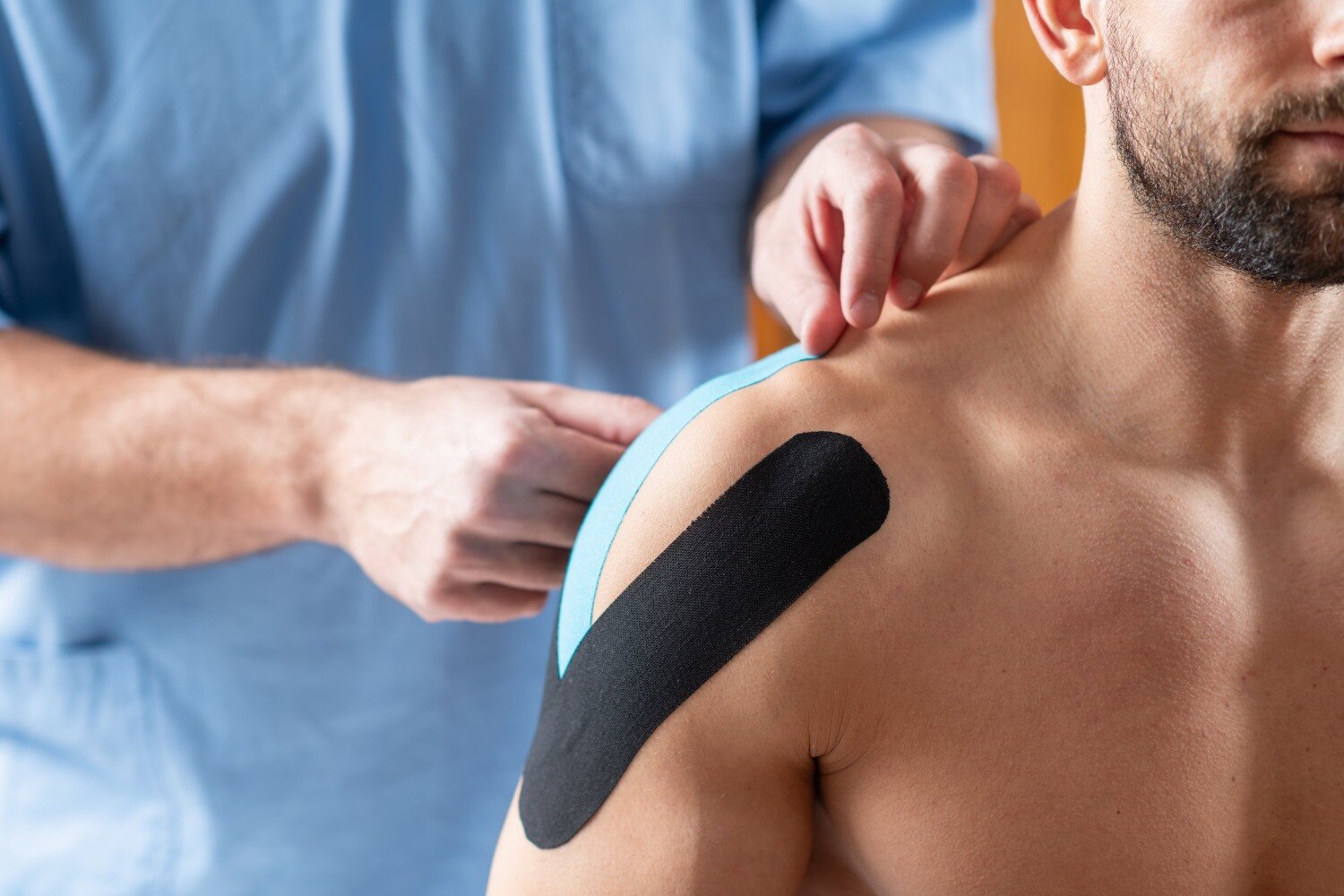
Kinesiology tape can change how supported an area feels during movement, but that temporary sensation is not the same as preventing a new injury. By the end, you will know what the evidence supports, when another support is a better choice, and how to use taping safely alongside strength, technique, and training-load changes.
Key takeaways
- Kinesiology tape has no convincing evidence for preventing new sports injuries.
- Use tape for short-term support, not as a replacement for strength or movement training.
- Compare kinesiology tape with braces, rigid sports tape, and targeted rehabilitation.
- Apply tape to clean, dry skin and remove it if irritation, numbness, or pain develops.
What the evidence says about injury prevention
A systematic review and meta-analysis found no convincing evidence that kinesiology tape prevents new sports injuries. The measured benefits were small and short-lived, involving pain, range of motion, strength, or proprioception rather than fewer sprains, strains, or tears.
What the evidence supports is narrower:
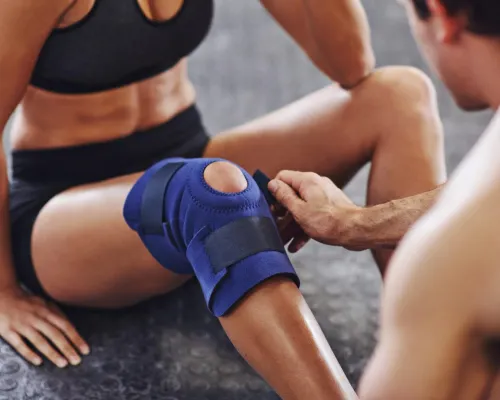
- Kinesiology tape for athletes may provide light sensory and mechanical input that makes a joint or muscle feel more supported.
- It may help some athletes manage symptoms during a training session or competition.
- It does not reliably protect a healthy athlete from every possible injury.
- It cannot replace strength training, movement correction, rehabilitation, footwear review, or training-load management.
For kinesiology taping for sports injury prevention in Bengaluru, treat the tape as an optional adjunct, not protective equipment. There is no single taping pattern proven to prevent injuries across the knee, ankle, shoulder, wrist, hamstring, calf, or lower back.
The useful application depends on the diagnosis, body region, sport movement, skin condition, and whether the goal is symptom relief, proprioceptive cueing, or temporary support.
The clearest practical case is an athlete with previous ankle sprains or persistent ankle instability, assessed alongside a structured prevention programme. Warm-ups that include balance, strength, landing and cutting technique, and sport-specific drills have stronger preventive support for major lower-limb injuries than kinesiology tape alone.
How kinesiology tape compares with other supports
The key difference is how much mechanical control each option provides. Elastic kinesiology tape stretches with movement and supplies light sensory or mechanical support; it does not lock a joint in position.
| Option | Main effect | Best fit and limitation |
|---|---|---|
| Kinesiology tape | Light cueing, symptom support, and modest movement guidance | sports injury prevention taping for an athlete with previous ankle sprains or instability; it is not proven to prevent injuries broadly |
| Rigid athletic tape | Stronger restriction of a joint or movement direction | Short-term ankle, wrist, or thumb support when limiting motion matters; it can loosen with sweat and restrict healthy movement |
| Compression sleeve | Even pressure, warmth, and body awareness | Mild swelling or comfort around the knee, calf, or elbow; it does not substitute for a brace when a joint needs stabilisation |
| Brace | Structured support that limits or guides specific movement | Recurrent ankle instability, ligament injury, or post-injury return; it is bulkier and can interfere with sport-specific movement |
| No tape | No external support or skin exposure | Healthy athletes with no instability may prefer unrestricted movement; it removes taping cost, irritation, and application errors |
For kinesiology tape for athletes, the practical choice depends on the diagnosis and the task. An unstable ankle during cutting may need a brace or rigid tape, while a mild symptom during training may justify elastic tape. None replaces strength, balance, technique, or load management.
When sports taping is worth considering
The strongest case is an athlete with recurrent ankle sprains or persistent ankle instability, not a healthy player seeking protection from every possible injury. Kinesiology taping for sports injury prevention in Bengaluru is best treated as a short-term adjunct when a defined problem affects a specific movement.
A sports taping physiotherapy assessment should check:
- The diagnosis: recurrent ankle sprain, patellofemoral pain, tendon overload, or a movement-control deficit.
- The body area: ankle, knee, shoulder, wrist, calf, hamstring, or lower back.
- The sport demand: cutting, landing, overhead motion, gripping, sprinting, or repeated jumping.
- The aim: symptom modulation, proprioceptive cueing, or temporary support.
- The disqualifiers: unexplained pain, open skin, adhesive reaction, numbness, swelling that is worsening, or pain that changes your movement.
| Pattern | Taping may be considered when | Do not use it as a substitute for |
|---|---|---|
| Recurrent ankle sprain or instability | You need a movement cue during training or return to sport | Balance, strength, and landing drills |
| Patellofemoral pain | A clinician identifies a knee-loading pattern and tape improves practice tolerance | Hip and quadriceps rehabilitation |
| Tendon, calf, hamstring, shoulder, or wrist symptoms | The diagnosis and sport-specific trigger are clear | Load reduction and progressive rehabilitation |
Taping a painful area without identifying the cause can hide warning symptoms and let you keep aggravating the injury. At Apex Physiotherapy, the assessment should therefore determine whether tape adds a useful cue rather than simply covering pain.
Related services
Kinesiology Taping Kinesiology Taping is an advanced physiotherapy technique designed to support muscles and joints, reduce pain, improve circulation, and enhance... View service → |
Sports Rehabilitation Sports Rehabilitation is a specialized physiotherapy program designed to help athletes and active individuals recover from injuries, improve... View service → |
How to apply kinesiology tape safely in Bengaluru
Safer application in Bengaluru starts with clean, completely dry skin—not sunscreen, lotion, sweat, or freshly applied oil. Heat, humidity, monsoon dampness, body hair, and frequent bathing can loosen the adhesive, so tape that repeatedly peels away is unlikely to provide consistent support.
1. Identify the purpose and body structure with a sports taping physiotherapy assessment. Do not tape unexplained pain, swelling, numbness, broken skin, rash, infection, or a suspected fracture. Test a small piece for 24 hours if you have sensitive skin or a history of adhesive reactions.
2. Wash the area, dry it thoroughly, and trim long hair rather than shaving immediately before application. Apply kinesiology tape for athletes with rounded corners, leaving the first and last 3–5 centimetres unstretched. Use light tension through the middle section; the exact direction and tension must match the joint, diagnosis, and intended cue.
3. Rub the tape gently after placement to activate the adhesive. Keep it on for about 2–4 days only if the skin remains comfortable. After bathing or heavy sweating, pat it dry instead of rubbing, and replace it when edges lift or the tape becomes wet and dirty.
4. Remove it slowly after soaking with warm water or an oil-based remover, pulling along the skin rather than upward. Stop immediately for burning, itching, blistering, increasing redness, tingling, or worsening pain, and seek clinical advice before reapplying. Never use tape to hide symptoms and continue aggravating training.
Where taping fits in a genuine prevention plan
Use tape as a temporary aid inside a prevention plan, never as the plan itself. It may improve perceived support or symptoms during a session, but it cannot build strength, correct landing mechanics, fix unstable joints, or compensate for excessive training load.
Keep these five measures in place:
- Strength training: Progress exercises for the calves, quadriceps, hamstrings, glutes, trunk, or shoulder muscles that control your sport’s demands.
- Movement correction: Practise landing, cutting, lifting, throwing, or running technique under coaching before poor mechanics become automatic.
- Footwear review: Replace worn soles and match shoes to your surface, sport, fit, and foot comfort; tape cannot correct unsuitable footwear.
- Rehabilitation: Complete prescribed mobility, balance, proprioception, and sport-specific drills after an injury instead of taping over weakness or pain.
- Training-load management: Increase duration, speed, intensity, and competition gradually, with recovery days; a taped joint can still be overloaded.
Use sports injury prevention taping when it gives a useful sensory cue or short-term symptom control during training. Reassess if you need tape for every session, pain returns when it comes off, or performance changes only while it is applied.
For kinesiology taping for sports injury prevention in Bengaluru, account for sweat and frequent bathing, then pair application with a written exercise and load plan. A physiotherapist can identify the missing prevention measure rather than simply adding another strip of tape.
Frequently asked questions
Does kinesiology tape prevent sports injuries?
No convincing evidence shows that kinesiology tape prevents new sprains, strains, or tears. Research has found small, short-lived changes in pain, range of motion, strength, or proprioception instead.
How does kinesiology tape compare with other sports supports?
Kinesiology tape provides flexible, low-profile support, while braces and rigid sports tape offer more restriction or stability. The appropriate option depends on the injury, sport, movement demands, and rehabilitation goals.
When is sports taping worth considering?
Consider taping when short-term symptom relief, movement awareness, or support helps you complete planned activity safely. Do not use it to ignore pain or return before strength and control have recovered.
How can you apply kinesiology tape safely in Bengaluru?
Apply it to clean, dry skin without open wounds, and test a small area first. Remove it if you develop itching, burning, rash, numbness, increased pain, or circulation changes; seek assessment for persistent symptoms.
What belongs in a genuine sports injury prevention plan?
Build prevention around progressive strength, sport-specific movement training, adequate recovery, warm-ups, load management, and appropriate equipment. Use taping as an optional support rather than the main strategy.
Keywords