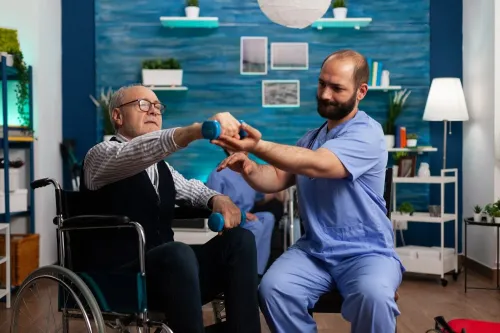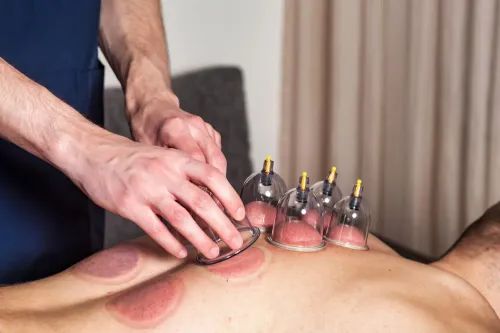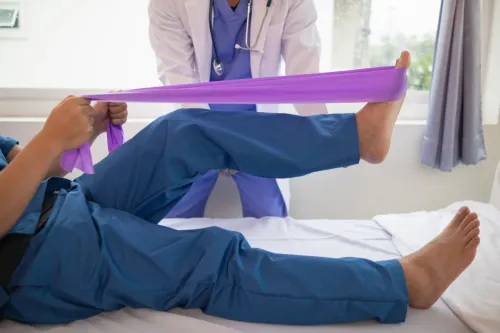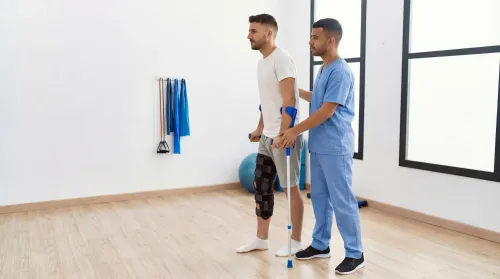
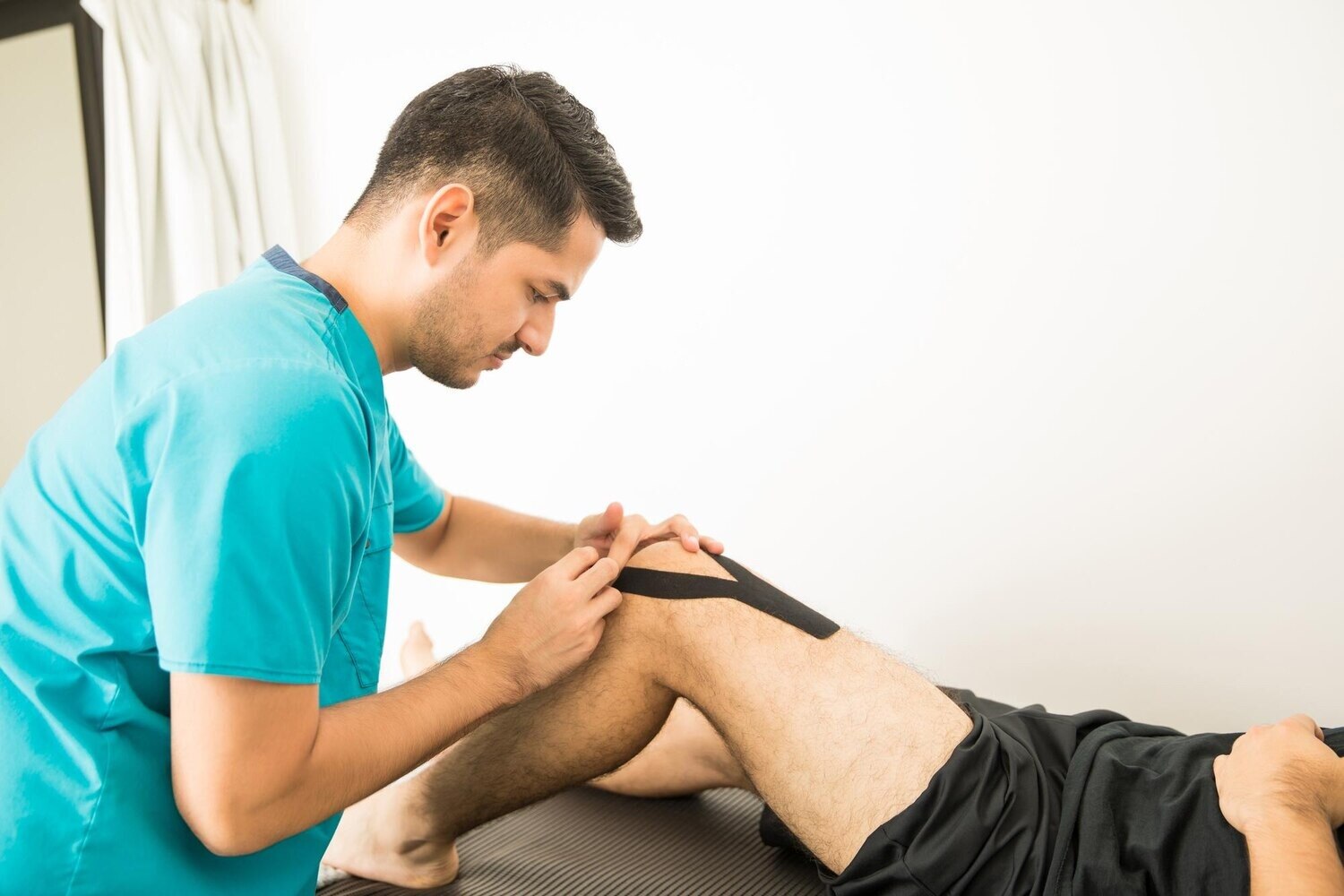
Conditioning means building the strength, endurance, balance, coordination, joint control and activity tolerance needed for a specific goal—not simply making pain feel better. You will be able to judge when taping or hands-on treatment can help you train, what they cannot build on their own, and how to choose a safe progression for running, gym work, cycling, sport or daily activity.
Key takeaways
- Use taping as temporary support, not a replacement for progressive exercise.
- Track strength, endurance, balance, movement quality, and activity tolerance—not pain alone.
- Use manual therapy to make exercise more comfortable and easier to perform well.
- Choose a conditioning plan with measurable goals and regular reassessment.
What conditioning requires beyond short-term pain relief
Pain relief is not the same as conditioning. Conditioning means improving the strength, endurance, balance, coordination, joint control, and tolerance needed for a specific activity. A treatment that makes your knee, back, or shoulder feel better for an hour has not automatically improved your ability to lift, run, climb stairs, or train.
| Approach | Useful short-term effect | What it does not build by itself |
|---|---|---|
| Kinesiology taping | Sensory feedback, movement reminder, or greater comfort during activity | Progressive muscle strength, aerobic fitness, tendon tolerance, or bone loading |
| Manual therapy | Reduced pain or improved movement that makes exercise easier to tolerate | Durable capacity without repeated exercise and progressive loading |
| Active conditioning | Measurable gains in strength, endurance, balance, and task tolerance | Immediate symptom relief in every session |
In conditioning physiotherapy, a taping manual therapy plan works best as support for active rehabilitation. A clinician may use tape or hands-on treatment, then direct you into resistance exercise, mobility work, walking, balance drills, or activity-specific loading. The temporary improvement matters only if it helps you practise more effectively and progress.
Passive treatment alone can consume time, encourage dependence, and delay self-management. Ask how progress will be measured: more repetitions, heavier resistance, longer walking, steadier balance, or improved sport performance. Those changes—not the brief feeling after treatment—show whether conditioning is improving.
How taping and manual therapy fit around progressive exercise
A hands-on technique or tape earns its place only when it improves your next training task. A physiotherapist checks your goal, pain behaviour, range of motion, strength, balance, gait or task performance, medical history, medicines and red flags.
The assessed problem, not a search for kinesiology taping and manual therapy benefits for conditioning Bellandur, determines the choice.
- Select manual therapy to address a movement restriction or pain that limits exercise, or apply kinesiology tape as a temporary sensory cue or comfort aid.
- Retest the relevant task immediately: a squat, step-down, shoulder lift, single-leg stance, walking pattern or easy run.
- Convert the change into active work, such as progressive resistance, mobility drills, balance practice, running intervals or sport-specific loading.
- Record a baseline and progression target, including repetitions, resistance, joint range, balance time, running distance, pace or recovery between efforts.
A better squat after treatment is an opportunity, not proof of improved conditioning. Strength and tolerance increase through repeated loading, while balance and coordination improve through practice.
Manual therapy benefits conditioning only when reduced pain or easier movement helps you complete that work; passive treatment alone does not build aerobic fitness, tendon capacity or muscle strength.
The same principle applies to knee osteoarthritis and other persistent problems: use the immediate response to guide exercise, then reduce reliance on tape or hands-on care as your own capacity improves. If function does not improve across reassessments, the plan needs adjusting rather than adding more passive treatment.
How to use kinesiology tape during training without overclaiming
Tape is an adjunct, not conditioning. It may change sensory feedback, remind you to modify a movement, or make a session more comfortable; it does not build strength, aerobic fitness, tendon tolerance, bone loading, or sport skill. Systematic reviews have not found consistent, clinically important benefits across musculoskeletal conditions.
The phrase kinesiology taping bellandur is a search term, not a clinical indication.
- Ask a physiotherapist to check your goal, movement problem, skin integrity, and history of adhesive reactions before application.
- Apply it to clean, dry, intact skin without lotion, wounds, or active eczema. Use the recommended direction and tension; do not stretch the tape aggressively just to make it feel tighter.
- Follow the advised wear period, keep checking the skin, and remove it gently rather than ripping it off.
- Remove it immediately for burning, marked itching, blisters, or redness that spreads or worsens. Stop using it until the skin settles and seek assessment if the reaction persists.
- Treat reduced pain as permission to train within the planned workload, not as proof that the injury has healed. If symptoms flare later that day or the next morning, reduce volume or intensity.
| Activity | Tape may suit when | Do not rely on it when |
|---|---|---|
| Running | It helps you notice stride or alignment changes during a graded return | It masks pain while distance or speed rises sharply |
| Gym training | It supports a technique cue during progressive resistance work | You use it instead of increasing load, repetitions, or control |
| Cycling | It improves comfort during a measured ride | Numbness, swelling, or persistent pain needs investigation |
| Field sports | It supports a short practice while drills and recovery are monitored | Cutting, sprinting, or contact remains painful or unstable |
| Everyday activity | It provides temporary reassurance during walking or work | You need tape continuously to manage ordinary movement |
When manual therapy can make conditioning more tolerable
Manual therapy makes conditioning more tolerable when examination shows a modifiable restriction or symptom response, not merely because a technique is available. A physiotherapist checks your goals, pain behaviour, range of motion, strength, balance, gait, task performance, medical history and medicines, then chooses a technique and retests movement.
“Kinesiology taping Bellandur” and “manual therapy benefits Bellandur” are search terms, not clinical indications.
| Technique | Finding it may address | How it can support conditioning |
|---|---|---|
| Joint mobilisation | Restricted or painful joint movement | Creates a temporary window for squats, walking, lifting or mobility drills |
| Soft-tissue work | Local muscle or soft-tissue sensitivity | Makes strengthening or running practice more comfortable |
| Manipulation | A specific, screened movement restriction | May improve movement briefly before active retraining |
| Guided movement | Poor control, fear or coordination | Builds confidence while you practise the task yourself |
- Use any improvement immediately: add progressive resistance, balance drills, walking, running drills or sport-specific loading. Pain relief that does not lead to more movement, strength or activity tolerance is not conditioning.
- Seek medical assessment before routine mobilisation or manipulation for unexplained weight loss, fever, recent major trauma, progressive weakness or numbness, bowel or bladder changes, suspected fracture, infection, cancer, or severe unremitting night pain. Passive treatment should support self-management, not replace it.
How to judge a conditioning plan in Bellandur
Judge a conditioning plan by what you can do better, not only by how comfortable you feel after treatment. Conditioning physiotherapy should produce measurable changes in strength, range of motion, balance, walking, coordination, endurance, or tolerance for your specific work, sport, or daily tasks.
- Check the baseline: Does the clinician record a task such as a squat, stair climb, jog, lift, reach, or single-leg balance, alongside pain behaviour, strength, movement, and relevant medical history?
- Check the workload: Does the plan specify exercise volume, intensity, recovery, and a gradual increase? Track symptoms during training and again the next day; a delayed flare means the load needs adjusting.
- Check the progression: After taping and manual therapy, do you practise resistance, mobility, balance, running, or sport-specific drills? A short-term pain reduction is useful only if it helps you perform more active work.
- Check self-management: Do you leave with home exercises, activity limits, progression rules, and clear instructions for handling a flare? Passive sessions without these can create dependence without building conditioning.
Arrange an outpatient assessment in Bellandur when pain, weakness, stiffness, balance loss, or reduced activity has persisted, keeps returning, or blocks planned progression. Assessment is particularly worthwhile after surgery, injury, a neurological change, or uncertainty about safe loading. Apex Physiotherapy can help establish those measures before selecting taping or hands-on care.
Related services
Kinesiology Taping Kinesiology Taping is an advanced physiotherapy technique designed to support muscles and joints, reduce pain, improve circulation, and enhance... View service → |
Manual Therapy Manual Therapy is a specialized hands-on physiotherapy technique designed to reduce pain, improve mobility, restore joint function, and accelerate... View service → |
Frequently asked questions
Can kinesiology taping and manual therapy improve conditioning?
They can support conditioning by reducing discomfort or improving movement tolerance, but progressive strengthening, endurance, balance, and activity-specific practice drive lasting improvement.
How should kinesiology tape be used during training?
Use tape as temporary support during selected activities, check your skin, and remove it if you develop itching, redness, numbness, or worsening pain. Do not treat it as proof that an injury is healed.
When can manual therapy help with conditioning?
Manual therapy can help when stiffness, pain, or restricted movement makes exercise difficult. Pair it with active exercise so the improved comfort or mobility transfers to training.
How can you judge a conditioning plan in Bellandur?
Look for measurable goals such as more repetitions, longer walking time, better balance, improved joint control, or easier sport-specific tasks, with progress reviewed regularly by a physiotherapist.
Related service
Sports Rehabilitation Sports Rehabilitation is a specialized physiotherapy program designed to help athletes and active individuals recover from injuries, improve... View service → |
Keywords