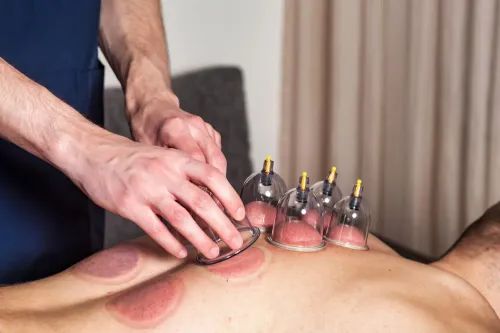
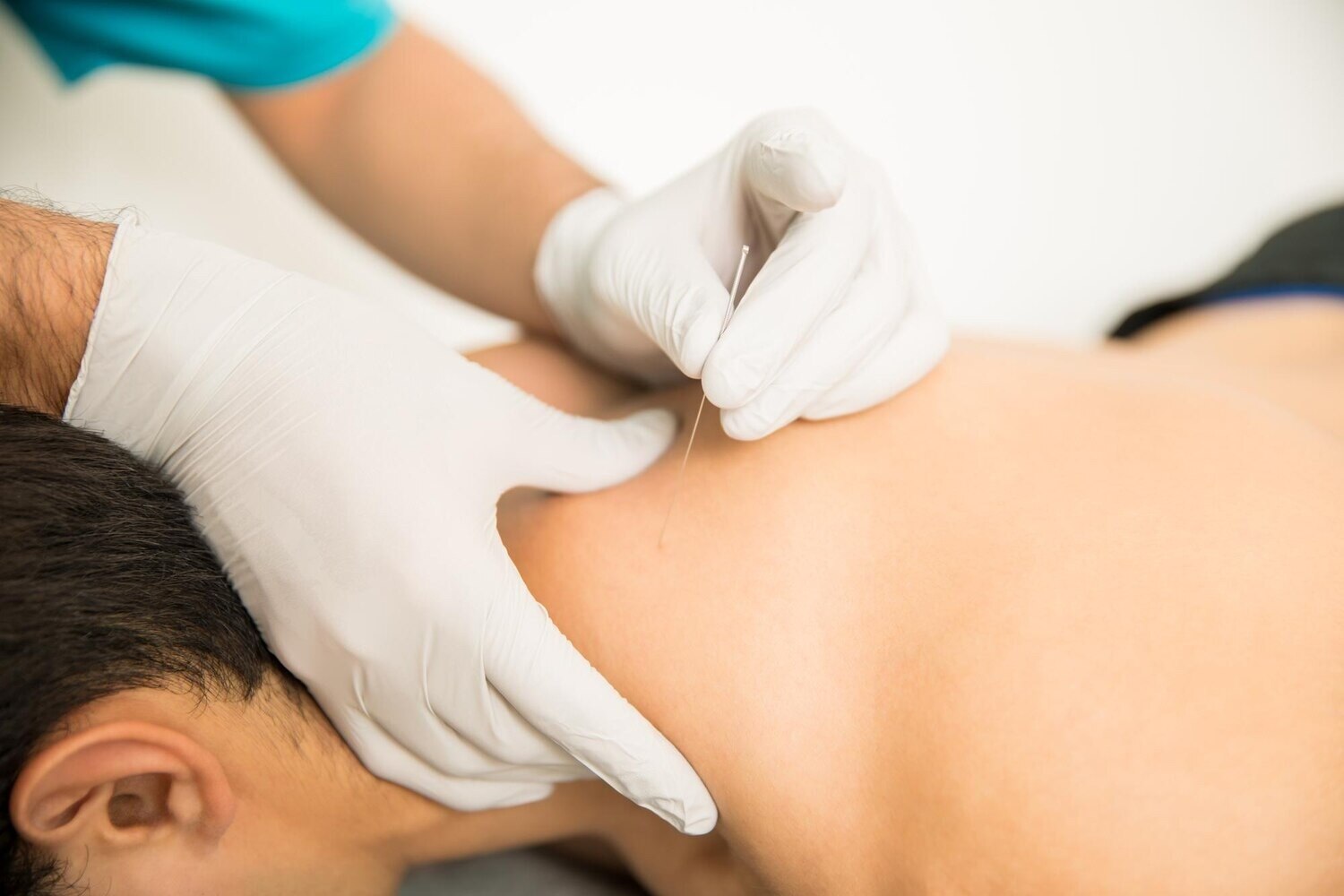
Needling and kinesiology tape are not interchangeable treatments: one uses a sterile needle to address selected painful or overactive tissue, while the other applies adhesive sensory input during movement. By the end, you will know which questions to ask, what each session involves, when extra safety checks apply, and why both techniques work best alongside active rehabilitation.
Key takeaways
- Choose needling for movement-limiting muscle problems or myofascial trigger points.
- Choose kinesiology tape for temporary sensory support during a specific task.
- Complete medical screening before needling when health risks or unusual symptoms exist.
- Test the tape on a small area and remove it slowly if skin irritation starts.
Needling or tape: which treatment fits your rehabilitation goal?
Dry needling is more logical when a movement-related muscle problem or myofascial trigger point is limiting exercise; kinesiology tape is more logical when temporary sensory input during a task may make movement feel less painful or supported.
| Option | What it does | What it cannot do |
|---|---|---|
| Dry needling | Uses a solid filiform needle, without injecting medication, to target myofascial trigger points or painful muscle tissue | Does not restore strength, balance, gait, joint capacity, or sports tolerance by itself |
| Kinesiology tape | Provides temporary sensory input that may change pain or perceived support during movement | Does not repair cartilage or physically realign a joint, kneecap, spine, or surgical repair |
Needling may reduce pain or disability enough for you to practise exercise more effectively, but the lasting work comes from progressive rehabilitation. Tape can help you attempt a movement for a short period; it is not a structural correction.
Dry needling is not the same as acupuncture. Dry needling is selected from movement findings, muscle behaviour, and myofascial symptoms, while acupuncture follows traditional acupuncture diagnostic and treatment systems.
The right choice for needling or kinesiology taping for rehabilitation bellandur depends on your diagnosis, functional goal, skin condition, medical history, and the active treatment planned alongside the technique. Ask which exact method is proposed, what it is intended to change, and how progress will be measured beyond pain relief or tape remaining attached.
What happens during a dry-needling session?
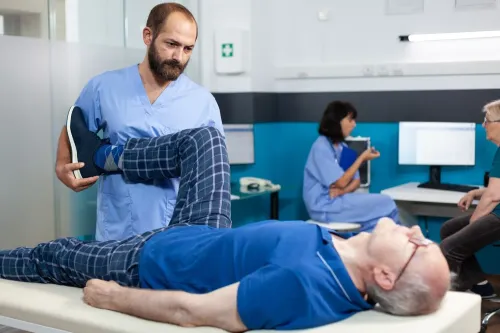
A dry-needling session begins with an assessment, not immediate needle insertion. The practitioner reviews your symptoms, movement, muscle function, medical history, bleeding risk, skin condition, sensation, and any reason to avoid the proposed site. You give consent and report anything that feels unsafe.
- You are positioned so the target area is visible, accessible, and supported.
- The practitioner identifies the muscle or tissue to treat, cleans the skin, and opens sterile, single-use solid filiform needles.
- Each needle enters at the planned depth. You may feel a brief prick, pressure, or a local twitch as a sensitive muscle point responds.
- The needles are removed after a period set by the target area and your response. The practitioner then checks the skin and discusses after-effects.
Local soreness, a small amount of bleeding, bruising, fatigue, or temporary symptom aggravation can occur. Soreness often settles within one or two days; bruising can last longer when it is larger or you have increased bleeding risk. Tell the practitioner immediately if pain becomes sharp, escalates, or feels unusual.
Do not try to tolerate it silently.
“Needling kinesiology bellandur” is not a single procedure label. Ask whether the proposal is dry needling, acupuncture, or an injection-based procedure, and what it targets. If you are searching for needling rehabilitation in bengaluru, ask how the technique supports your active rehabilitation rather than replacing exercise.
When does needling require extra screening or medical assessment?
Dry needling needs extra screening whenever your medical history, symptoms, skin, or treatment site increases risk; postpone it when safety is uncertain.
Before needling rehabilitation in bengaluru, tell the physiotherapist if you take anticoagulants or antiplatelet medication, have a bleeding disorder, are pregnant, have diabetes, immune suppression, poor wound healing, reduced sensation, needle fear, or difficulty reporting symptoms. Do not stop prescribed medication yourself.
- Do not insert a needle through infected, inflamed, or broken skin.
- Ask for extra assessment around the chest, upper back, and shoulder. Incorrect depth in these areas carries a rare but serious pneumothorax risk.
- Before consenting, ask how the practitioner will identify anatomy, control needle depth, and advise you about emergencies.
- Seek urgent medical assessment for new chest pain, shortness of breath, or a persistent cough after treatment.
- Treat unexplained severe pain, fever, progressive weakness, or new numbness as reasons for medical evaluation, not symptom masking.
| Situation | Safer decision | Why |
|---|---|---|
| Anticoagulant or antiplatelet use | Individual risk assessment | Bleeding risk varies; stopping medication can be dangerous |
| Poor sensation or difficulty communicating symptoms | Consider another treatment or medical review | You may not detect or report a complication |
| Chest, upper back, or shoulder site | Use only after anatomy and emergency advice are explained | A depth error can injure the lung |
A clinician may choose exercise, manual treatment, medical review, or no needle for a specific site. That decision is safer than selecting needling by name alone.
How is kinesiology tape applied, tested, worn, and removed?
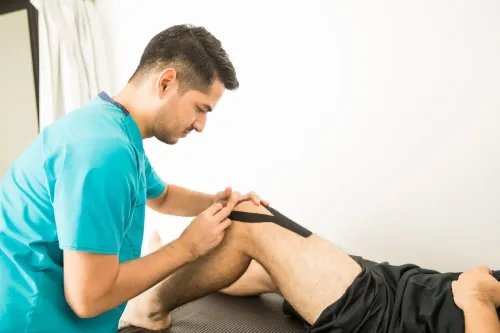
A safe kinesiology taping session starts with a skin check, not with tape. The clinician inspects for eczema, infection, broken or fragile skin, healing wounds, and previous blistering from plasters or medical tape, then cleans and dries the area.
Before full application, ask how suitability will be tested if you have adhesive allergy or sensitive skin. A small test strip can reveal irritation before a larger application causes a wider reaction.
- The clinician trims excess hair when needed, avoids recently shaved or damaged skin, and rounds the tape corners so they catch less on clothing.
- They select anchor points, tape direction, and tension for the intended movement or sensory goal. Tape is not a mechanical realignment for a joint, kneecap, spine, or surgical repair.
- Your joint is placed in the position required for application. The tape is smoothed onto the skin, with the anchors laid down without unnecessary pulling.
- Wear time is individual and commonly lasts a few days, not indefinitely. Sweat, bathing, friction, skin response, and the treatment goal determine when it comes off.
Remove it slowly in the direction of hair growth while supporting the skin; do not rip it away. Remove it immediately for burning, itching, rash, swelling, increasing pain, or numbness, and seek advice if symptoms persist or are severe.
Do not tape over an incision, drain, graft, or postoperative swelling without surgical or rehabilitation-team clearance. This applies whether you searched for kinesiology taping rehabilitation Bellandur or needling kinesiology Bellandur.
How should you choose a rehabilitation plan in Bellandur?
A sound plan starts with the problem you need to solve, not the treatment name in a search result. “Needling kinesiology bellandur” and “kinesiology taping rehabilitation bellandur” describe marketing terms or search intent, not clinical suitability.
| Option | Intended change | What it cannot do |
|---|---|---|
| Dry needling | Temporarily reduce pain or muscle sensitivity so movement and exercise are easier | Restore strength, balance, gait, joint capacity, or sports tolerance alone |
| Kinesiology tape | Provide temporary sensory input or support during a task | Repair cartilage, realign a joint, restore neurological control, or prevent contracture alone |
Ask these five questions at the consultation:
- What exact technique is proposed: dry needling, acupuncture, or an injection-based procedure?
- What diagnosis or functional problem is it targeting?
- What active rehabilitation accompanies it?
- How will progress be measured?
- What alternatives and risks apply?
Useful measures include strength, range of motion, walking or balance, task performance, pain response, and sport-specific tolerance. Tape staying attached or a muscle twitching during needling is not proof that rehabilitation is working.
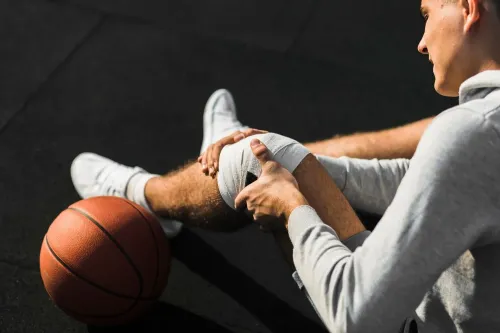
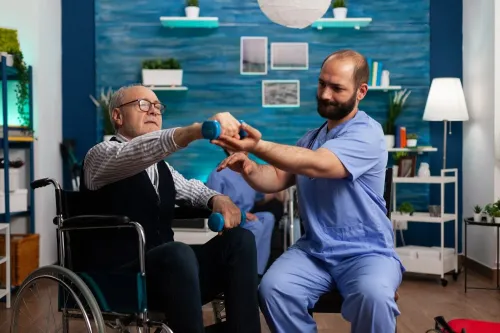
Tape can temporarily support task practice or positioning in neurological rehabilitation, but postoperative use requires clearance around incisions and swelling. For chronic knee pain, it is symptom modulation—not cartilage repair—and does not replace strengthening, activity planning, education, or weight-management support where appropriate.
Apex Physiotherapy is worth considering when its assessment links the chosen technique to personalised exercise, measurable goals, and a planned reassessment rather than presenting tape or needling as the whole treatment.
Related services
Kinesiology Taping Kinesiology Taping is an advanced physiotherapy technique designed to support muscles and joints, reduce pain, improve circulation, and enhance... View service → |
Needling Needling Needling is an effective physiotherapy technique used to relieve muscle pain, reduce tension, improve mobility, and accelerate recovery from... |
Frequently asked questions
Which is better for rehabilitation: dry needling or kinesiology tape?
Dry needling fits a movement-limiting muscle problem or myofascial trigger point. Kinesiology tape fits temporary sensory input during a task that feels painful or unsupported.
What happens during a dry-needling session?
A physiotherapist assesses your movement, identifies the target area, cleans the skin, inserts fine sterile needles, and reassesses movement or symptoms afterward.
When does dry needling require extra screening?
Request medical assessment before needling if you take blood thinners, have a bleeding disorder, an active skin infection, poor wound healing, pregnancy-related concerns, or unexplained neurological symptoms.
How long should kinesiology tape stay on?
Follow the physiotherapist’s instructions, check the skin daily, and remove the tape slowly if it causes itching, burning, rash, numbness, or increased pain.
Keywords