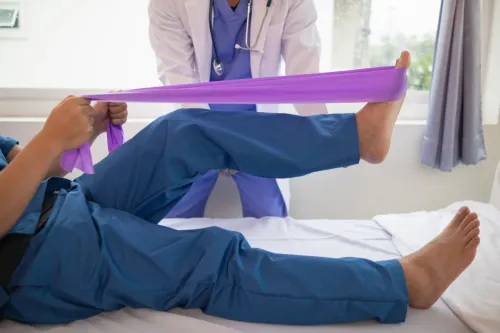

Pain that lingers after a run is not automatically ordinary soreness or a sports injury; its timing, location, severity, and response to loading help determine the next step. You will learn how to triage warning signs, understand common running-injury patterns, adjust training safely, and judge when assessment is more useful than self-care or complete rest.
Key takeaways
- Seek assessment for focal pain, swelling, limping, or symptoms worsening during runs.
- Match your symptoms to common injury patterns before changing mileage or intensity.
- Use pain response, strength, and single-leg control to guide return-to-running stages.
- Choose running injury physiotherapy when persistent pain limits training or daily movement.
Is your ongoing running pain safe to monitor, or does it need assessment?
Normal post-run soreness usually feels diffuse, appears after an unfamiliar session, and improves within 24–72 hours. Training fatigue feels like heavy legs or reduced power without a specific worsening pain.
A one-off acute injury follows a clear event and begins to settle; pain lasting more than three months meets the widely used definition of chronic pain, but duration alone does not prove tissue damage.
1. Seek urgent medical assessment for inability to bear weight, a visibly deformed joint, sudden severe swelling, calf swelling with breathlessness, progressive numbness or weakness, fever, loss of bladder or bowel control, rapidly worsening night or rest pain, or pain after a major impact.
2. Arrange prompt physiotherapy for focal bone tenderness, pain that begins earlier in each run, pain with walking or at rest, recurrent symptoms, swelling, or declining performance. Do not repeatedly test suspected bone-stress pain by running on it.
3. Monitor briefly only when symptoms are mild, improving, and absent during ordinary walking. Reduce the provoking session and reassess rather than pushing through worsening pain.
A runner may have a tendon, bone-stress, joint, nerve, referred-spinal, systemic, or pain-sensitisation problem. The painful body part alone does not establish the diagnosis. If you are searching for sports injury rehabilitation for runners ongoing pain in Bengaluru, seek sports injury pain rehabilitation that assesses the whole pattern, not just the sore spot.
Which running-injury pattern fits your symptoms, and what will an assessment check?
Pain location and behaviour suggest a pattern, not a diagnosis. Kneecap pain with stairs, squats, or prolonged sitting points toward patellofemoral pain, while tendon pain that responds to loading suggests Achilles tendinopathy. Pain spreading, tingling, numbness, or weakness raises the possibility of nerve or referred-spinal pain.
| Pattern | Clues to discuss with a clinician |
|---|---|
| Patellofemoral pain | Pain around or behind the kneecap with stairs, squats, or running |
| Achilles tendinopathy | Local tendon pain or morning stiffness that changes with loading |
| Plantar heel pain | Pain under the heel, often worse with first steps after rest |
| Medial tibial stress syndrome | Broad tenderness along the inner shin rather than one exact spot |
| Hamstring or calf injury | Local muscle pain with faster running, stretching, or forceful contraction |
| Iliotibial band pain | Outer-knee pain that appears repeatedly during running |
| Hip pain | Groin, side-hip, or buttock pain with running, stairs, or single-leg loading |
| Bone-stress injury | Focal bone tenderness, progressively earlier running pain, or pain with walking or rest |
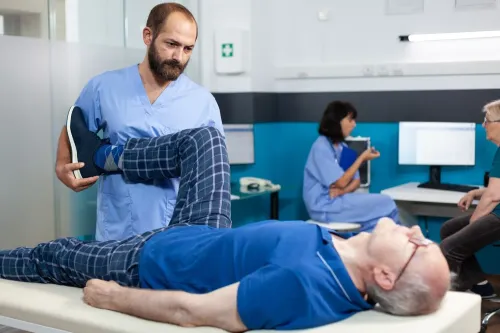
A sports physiotherapist reviews mileage, pace, hills, frequency, recovery, footwear, surfaces, pain timing, and recent training changes. Assessment includes gait or running analysis, joint range, strength, single-leg control, hop or loading tests, and screening for referred pain.
Imaging is not automatic: ultrasound or MRI abnormalities can exist without pain, while early X-rays can miss bone stress. Imaging is most useful when symptoms are uncertain, atypical, or potentially serious. This is the basis of running injury physiotherapy in Bengaluru.
How should you train while sports injury pain rehabilitation is underway?
Stop impact running when walking, hopping, or ordinary movement hurts. Stop repeatedly testing the injury with a full run; each test can prolong irritation. During sports injury pain rehabilitation, replace the aggravating dose with tolerable cycling, swimming, elliptical training, or strength work, provided the suspected injury and clinician guidance allow it.
- Use relative rest for patellofemoral pain and common tendon problems: reduce distance, speed, hills, frequency, or hard-surface exposure rather than stopping all movement. Keep exercise that does not increase symptoms.
- For patellofemoral pain, build hip and knee strength, then progress towards running-specific loading. Knee exercises alone leave a key part of the problem untreated.
- For Achilles tendinopathy, perform progressive tendon-loading exercise at least three times weekly, using an intensity you can tolerate. Prolonged complete rest does not rebuild tendon capacity.
- For suspected bone-stress injury, remove or modify impact. Do not run, hop, or repeatedly press the painful spot until walking and functional activities are pain-free or your clinician sets a safe threshold.
Avoid aggressive stretching of an irritated tendon. Ice or painkillers can reduce symptoms but cannot restore tissue capacity, and changing shoes will not correct a sudden mileage increase, excessive hills, or poor recovery. Increase mileage gradually.
Persistent fatigue, menstrual irregularity, reduced libido, unexplained weight change, recurrent injuries, or declining performance warrants screening for relative energy deficiency in sport (RED-S). Training reduction will not fix rehabilitation if food intake and recovery remain inadequate.
What does a safe return-to-running progression look like?
Resume only when walking and daily activities no longer increase symptoms. Sports injury rehabilitation for runners with ongoing pain in Bengaluru should treat return as a sequence of exposure decisions, not one clearance event.
- Begin with easy run-walk intervals on a predictable, forgiving surface. Keep the first sessions shorter than your previous runs and check pain during exercise, later that day, and the next morning.
- Increase one major stressor at a time. Build duration or distance first; add frequency, speed, hills, and harder surfaces only after the current load remains settled.
- Progress when pain stays tolerable, does not alter your gait, returns to the previous baseline within 24 hours, and strength or single-leg control is improving.
- Step back when pain becomes sharper, starts earlier, causes limping, increases later that day or the next morning, or appears during walking or hopping. Stop impact testing and seek review if symptoms suggest bone stress.
Gait retraining helps selected runners. A carefully chosen cadence change or reduced over-striding can reduce symptoms, but it is not a universal fix; the change must suit your mechanics and remain comfortable.
Recovery time varies with diagnosis, age, fitness, training history, and goals. Ongoing pain in Bengaluru deserves a tailored progression rather than a calendar-based return.
Which care option fits persistent running pain in Bengaluru?
A mild symptom that is clearly improving can suit self-care; persistent, recurrent, or worsening pain deserves running injury physiotherapy rather than repeated trial and error. Match the option to the question you need answered:
| Option | Role | When it fits |
|---|---|---|
| Self-care | Reduce load and monitor symptoms | Mild, improving pain with normal walking |
| Gym trainer | General strength and conditioning | Fitness guidance after diagnosis; cannot diagnose |
| Sports massage | Short-term comfort change | Muscle tightness, not proof of tissue capacity |
| Imaging | Answers selected structural questions | Suspected bone stress, atypical findings, or unclear diagnosis |
| Orthopaedic clinician | Medical diagnosis and surgical decisions | Suspected fracture, major trauma, neurological progression, systemic signs, or surgery |
| Complete rest | Removes running load | Short-term protection when impact aggravates pain; not a universal treatment |
A scan cannot explain every painful finding: tendons and joints can look abnormal without symptoms, while early bone stress can be missed on X-ray. Massage can feel useful without showing that the tissue tolerates running.
Generic rehabilitation fails when it ignores mileage, pace, hills, surfaces, sleep, nutrition, work demands, and your goal. Sports injury rehabilitation in Bengaluru must also account for heat, monsoon-slick routes, traffic-driven surface changes, apartment-gym treadmills, and access to parks or tracks.
A sports rehabilitation clinic in Bengaluru such as Apex Physiotherapy can assess those variables, build an active plan, and coordinate referral or co-management when medical review is needed. Choose care for the diagnosis, not a standard programme for every painful run.
Related service
Sports Rehabilitation Sports Rehabilitation is a specialized physiotherapy program designed to help athletes and active individuals recover from injuries, improve... View service → |
Frequently asked questions
When does ongoing running pain need assessment?
Arrange assessment for focal pain, swelling, limping, weakness, altered running mechanics, or pain that worsens during a run. Seek urgent medical care after major trauma, suspected fracture, sudden weakness, or loss of bladder or bowel control.
What will a running injury physiotherapy assessment check?
A clinician reviews training changes, pain behaviour, footwear, previous injuries, and goals, then checks movement, joint range, strength, balance, running mechanics, and functional tasks.
How should you train during sports injury pain rehabilitation?
Reduce or pause the activity that provokes pain, maintain fitness with pain-free alternatives, and follow a graded strengthening plan. Do not use painkillers to push through worsening symptoms.
What does a safe return-to-running progression look like?
Start when daily walking and basic strength tasks are comfortable, then alternate walking and easy running. Increase one variable at a time and step back if pain increases during the session or remains worse the next morning.
When should you choose running injury physiotherapy in Bengaluru?
Choose an assessment when pain persists despite reduced training, keeps returning, changes your stride, or prevents normal activity. A sports rehabilitation clinic in Bengaluru can tailor loading and return-to-running milestones.
Keywords