A Bengaluru road race, cricket tournament, badminton competition, football match, cycling event, swimming meet, or recreational fitness event demands more than a pre-event massage or a few static stretches. You will be able to set a realistic preparation timeline, identify the assessment and progression you need, and compare local clinics before booking.
Key takeaways
- Start conditioning eight weeks before your event when possible.
- Measure strength, balance, mobility, agility, and sport-specific loading.
- Progress training gradually, then taper before competition day.
- Use objective readiness checks before returning to competition.
Match the conditioning timeline to your event
Begin eight weeks before a Bengaluru road race, cricket tournament, badminton competition, football match, cycling event, swimming meet, or recreational fitness event if you can. That window allows strength, balance, plyometric, agility, and sport-specific loading to progress without cramming.
| Start | Best use | What to do |
|---|---|---|
| 8 weeks | Build a complete base | Assess injury history, range of motion, strength symmetry, balance, movement mechanics, aerobic capacity, training load, and recovery. Progress from controlled exercises to event-speed drills. |
| 6 weeks | Build meaningful capacity | Increase running volume, sprinting, jumping, cutting, contact, terrain, or cycling resistance according to the event. Test training tolerance and correct weak links. |
| 4 weeks | Prepare under event-like stress | Rehearse footwear, surfaces, duration, pacing, and sport-specific drills. Add high-intensity sessions, then leave enough recovery between them. |
| 2 weeks | Refine, do not cram | Maintain strength and intensity while reducing unnecessary volume. Avoid unfamiliar exercises, sudden mileage increases, and a last-minute hard session that creates soreness. |
Sports injury prevention conditioning in Bengaluru should match your actual event, not a generic exercise sheet. Ask how strength or hop tests, movement quality, training tolerance, and sport drills will change the programme.
Pain-free preparation is not rehabilitation clearance after an existing injury. Rehabilitation needs objective, sport-relevant progression and confidence checks; a recent injury, swelling, instability, or loss of function deserves assessment before you follow a pre-event plan.
What an event-readiness assessment should measure
An event-readiness assessment measures whether your body can tolerate the event’s actual demands, not merely whether pain has decreased. The clinician should record baseline findings, repeat key tests, and explain how each result changes your programme.
- Match the assessment to the event: running volume, sprinting, cutting, jumping, contact, terrain, footwear, expected duration, and recovery breaks.
- Check injury history, current training load, joint range of motion, strength symmetry, balance, movement mechanics, aerobic capacity, and recovery between sessions.
- Use relevant tests, such as single-leg strength, hop performance, landing control, repeated-effort drills, or sport-specific skills. A generic exercise list without progression criteria proves little.
- Recreate event demands progressively through cricket bowling, badminton lunges, football changes of direction, cycling intervals, swimming efforts, or race-pace running.
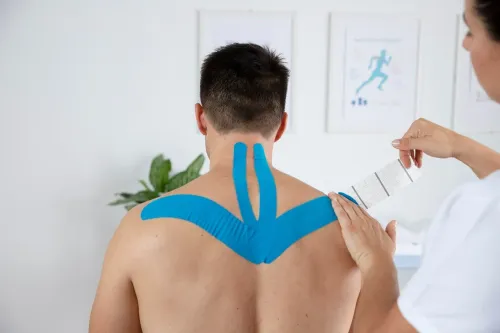
Sports rehabilitation before events applies when an existing injury still requires staged recovery. The plan must track pain during and after loading, swelling, weakness, instability, altered gait, confidence, sensorimotor control, and sport-specific performance. Pain relief, taping, or manual therapy can make movement easier without restoring tissue capacity.
Event preparation starts with a healthy or stable athlete building tolerance; rehabilitation restores lost function before competition. Chest pain, fainting, severe unexplained breathlessness, neurological symptoms, deformity, inability to bear weight, rapidly increasing swelling, or suspected fracture require medical assessment instead of routine conditioning.
A poor movement or strength score identifies a trainable limitation, not a prediction of inevitable injury.
Build strength, sport-specific loading, and a taper
Start with baseline measures, then increase force, speed, complexity, and total workload in that order. Record relevant strength or hop performance, balance, movement quality, training tolerance, and symptoms so each progression has a clear reason.
- Build general capacity with progressive resistance training, single-leg control, balance work, and mobility matched to your sport. Increase load or repetitions only when technique remains consistent and symptoms settle within 24 hours.
- Add power and decision-making through jumps, landing, agility, acceleration, and deceleration drills. A runner needs repeated stride and hill demands; a footballer or cricketer needs cutting, sprinting, and stopping; a badminton player needs lunges and rapid direction changes.
- Rehearse event demands at increasing volume and speed. Include the expected distance, interval length, terrain, footwear, contact, recovery periods, and competition duration instead of relying on a short warm-up or isolated exercise.
- Complete high-intensity sessions before the final preparation period. Repeat the hardest relevant efforts while tracking pain, swelling, unusual fatigue, and next-day function; persistent or worsening symptoms require a revised load, not a forced progression.
- Taper by reducing training volume while retaining brief bouts of intensity and sport-specific speed. Endurance athletes often reduce volume by about 41–60% for up to 21 days while maintaining frequency and intensity, but the taper must fit the event and your training history.
Event-day preparation should leave you fresh, not detrained: use familiar warm-up drills, avoid new equipment, and schedule the final demanding session early enough to recover fully. The plan is conditioning when you are building capacity; after an injury, clearance also requires confidence, sensorimotor control, and sport-specific performance.
How to choose conditioning physiotherapy in Bengaluru
A clinic for conditioning physiotherapy in bengaluru should plan around your event, not hand every athlete the same exercise sheet. Ask whether it has prepared runners for Bengaluru road races, badminton players for repeated lunges, or footballers for contact, sprinting, and cutting.
Ask these questions before booking:
- Will you analyse my event’s running volume, sprinting, jumping, changes of direction, contact, terrain, footwear, and expected duration?
- Which baseline measures will you record: relevant strength, hop performance, balance, movement quality, aerobic capacity, and training tolerance?
- What result allows progression, and when will you retest rather than simply add exercises?
- How will you reproduce my event’s speeds, intervals, surfaces, and sport-specific decisions?
- How will you change the plan if pain, swelling, stiffness, fatigue, or next-day symptoms increase?
| What the clinic shows | What it means | Warning sign |
|---|---|---|
| Baseline and repeat tests | Progress is measured against your starting point | No numbers or retesting |
| Sport-specific drills | Training resembles match or race forces | Only massage, stretching, or generic exercises |
| Symptom-based adjustments | Your changing response alters load | “Push through” every symptom |
| Injury-history review | Existing rehabilitation is separated from event preparation | One plan for a new injury and an uninjured athlete |
A sports injury prevention near me search is only useful if you verify these details directly. Apex Physiotherapy can be considered if its assessment links exercises to your event and explains how results will change the programme.
Chest pain, fainting, severe unexplained breathlessness, deformity, inability to bear weight, rapidly increasing swelling, or neurological symptoms require medical assessment instead of routine conditioning.
Related service
Sports Rehabilitation Sports Rehabilitation is a specialized physiotherapy program designed to help athletes and active individuals recover from injuries, improve... View service → |
Use objective readiness checks before you compete
Competition readiness means you can repeat the event’s key demands at expected speed and volume without worsening symptoms during the session or over the next 24 hours. A pain-free warm-up alone is not proof that your body is ready.
1. Repeat baseline tests. Compare relevant strength, hop distance, balance, joint range of motion, and movement quality with earlier results. A clinician should explain what improvement or asymmetry changes the programme.
2. Test the sport, not just the muscle. A runner needs repeated accelerations and intervals; a football or badminton player needs decelerations, cutting, and jumps; a cyclist or swimmer needs sustained event-specific efforts. Match the test volume and speed to competition demands.
3. Check recovery. Record pain, swelling, stiffness, fatigue, and performance during training and the following 24 hours. A decline after each session means the load is exceeding current capacity, even if the session itself feels manageable.
4. Treat confidence and control as readiness measures. After an ankle injury, the PAASS framework includes pain, ankle impairments, confidence, sensorimotor control, and sport-specific performance. Fear, instability, or altered technique deserves progression work rather than forced clearance.
5. Change the event plan for increasing pain, swelling, weakness, instability, limping, or reliance on pain medication, taping, or treatment to complete ordinary training. Seek urgent medical assessment for chest pain, fainting, severe breathlessness, neurological symptoms, deformity, inability to bear weight, rapidly increasing swelling, or suspected fracture.
Frequently asked questions
When should you start sports injury prevention conditioning before an event?
Start eight weeks before the event when possible. That allows strength, balance, plyometric, agility, and sport-specific loading to progress without cramming.
What should an event-readiness assessment measure?
It should measure strength, balance, mobility, agility, movement control, and tolerance for the demands of your sport.
How should you build strength and sport-specific loading before competition?
Progress strength first, add sport-specific loading and higher-speed drills, then reduce training volume during a taper before the event.
How do you choose conditioning physiotherapy in Bengaluru?
Choose a provider that assesses your event demands, tests objective readiness, creates a progressive plan, and adjusts loading around your training schedule.
What readiness checks should you complete before competing?
Use repeatable checks such as pain-free sport movements, single-leg balance, strength comparisons, jumping or agility tasks, and event-specific drills.
Keywords