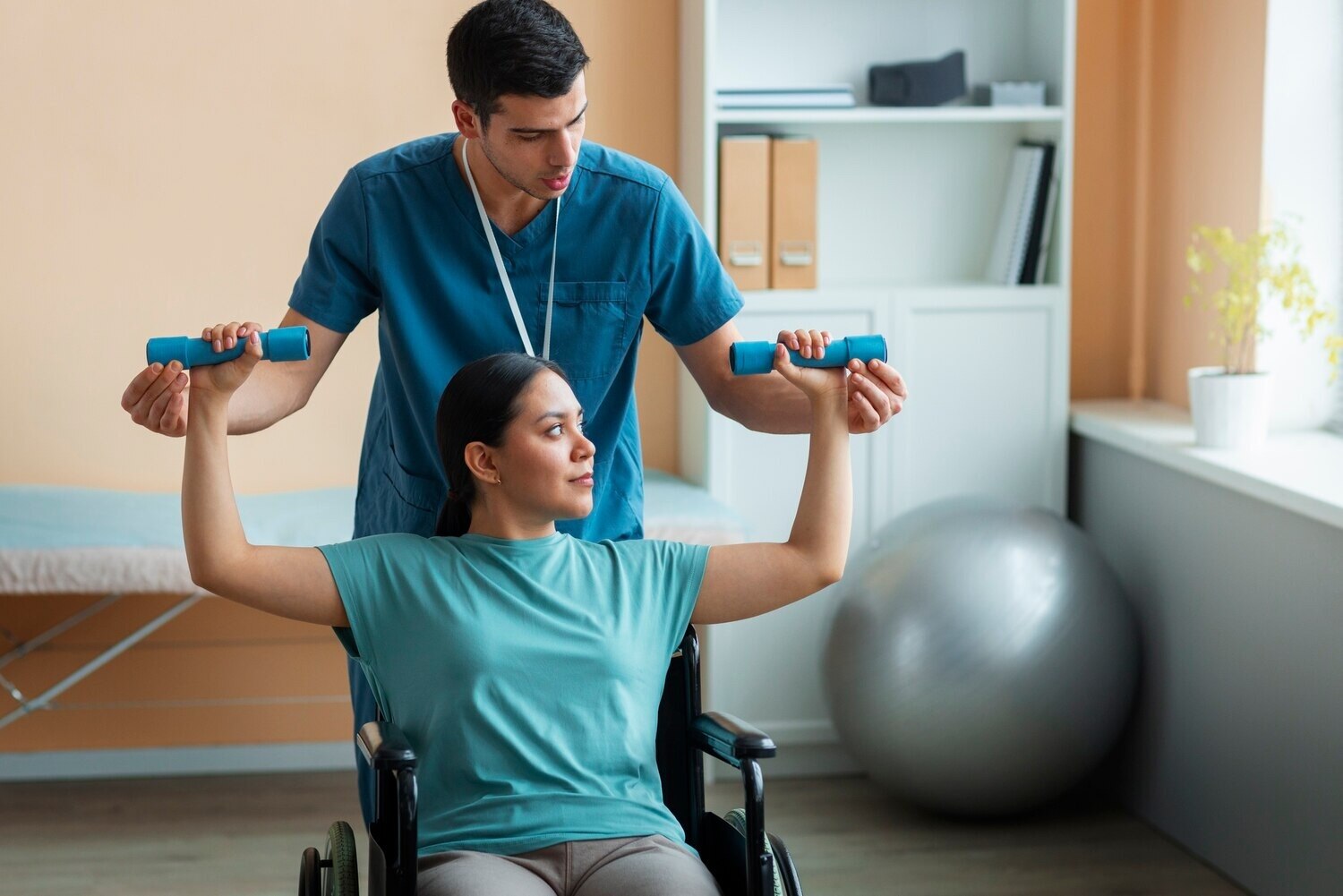
Fatigue, falls, freezing, stiffness, dizziness, and poor coordination can make ordinary exercise unsafe after a neurological condition. You will learn how to recognise warning signs, what a proper assessment measures, how activity is progressed, and how to choose practical support in Bengaluru.
Key takeaways
- Neurological weakness can involve balance, sensation, timing, vision, and blood-pressure control.
- Assess walking, transfers, fatigue, balance, sensation, coordination, and fall risk before increasing activity.
- Progress exercise gradually and stop when symptoms signal unsafe fatigue or loss of control.
- Use clear pathways, stable supports, supervision, and documented practice targets at home.
Why neurological conditioning problems are different from ordinary weakness
Conditioning after neurological problems is not simply rebuilding weak muscles. After stroke, Parkinson’s disease, spinal-cord injury, multiple sclerosis, or neuropathy, the brain, spinal cord, or nerves can disrupt timing, sensation, coordination, balance, vision, blood-pressure control, and energy.
You may be strong enough to stand but unable to place a foot accurately or react when you start to fall.
Neuro rehabilitation movement problems become unsafe when “more exercise” ignores these changes. Fatigue can worsen hours later; reduced sensation can hide a foot injury; orthostatic blood-pressure drops can cause fainting; and altered tone can restrict movement or trigger pain.
Spasticity is not automatically harmful: some people use it to stand, while severe tone can cause contractures, skin problems, or inefficient walking. Progression needs clinical assessment rather than a standard gym routine.
Seek emergency care immediately for:
- New one-sided weakness, facial droop, speech trouble, vision loss, or sudden severe headache
- A first seizure, new confusion, or rapidly worsening neurological symptoms
- Chest pain, fainting, severe breathlessness, or sudden loss of bladder or bowel control
- A rapid, unexplained change in walking or repeated falls causing injury
Arrange urgent medical review for worsening established symptoms or unexplained falls. Routine neuro physiotherapy suits stable disability after serious causes have been assessed; it must not delay investigation of an acute event.
What a safe neuro-conditioning assessment examines
Before selecting walking practice, transfer training, aerobic conditioning, strengthening, balance work, flexibility exercises, task-specific practice, or assistive-device training, a clinician confirms the neurological diagnosis and baseline function. They review falls history and seizures, observe walking speed, timed sit-to-stand, transfers and turning, and examine range of motion, strength, tone, coordination, sensation, fatigue, cognition and vision.
They check blood pressure, heart rate and oxygen saturation when indicated, plus medication timing, swallowing and communication.
Neuro rehab conditioning problems in Bengaluru need an individual plan because two people with the same diagnosis can differ in endurance, autonomic symptoms, heat tolerance, home layout, cognition and goals. A standard protocol can trigger a fall, exhaustion or poor movement quality; these findings determine dosage, supervision, equipment and setting.
| Next step | Better first step when |
|---|---|
| Medical review | There is sudden decline, a new falls pattern, fainting, chest symptoms, seizure, or unexplained vital-sign change. |
| Occupational therapy | Dressing, bathing, home access, wheelchair use, transfers, or cognition limits independence. |
| Speech and swallowing therapy | Choking, a wet voice, communication difficulty, or unsafe eating appears. |
| Hydrotherapy | Buoyancy could make movement safer after medical screening and pool-access planning. |
| Neuro physiotherapy | Gait, balance, tone, coordination, endurance, or task-specific movement is the main limitation. |
How activity progresses without pushing into a setback
Increase one variable at a time: add two minutes to walking, two repetitions, a short distance, slightly more speed or resistance, a harder balance task, or a shorter rest interval. Keep perceived exertion moderate, record recovery time, and repeat the same level until movement remains controlled and symptoms return to baseline by the next day.
There is no diagnosis-specific formula for neuro rehab conditioning in Bengaluru.
Normal effort means faster breathing, warm muscles, and tiredness that settles with rest. Stop and contact your clinician for post-exertional worsening, delayed fatigue lasting into the next day, new pain, a spasticity flare, loss of movement quality, or heat-triggered weakness and blurred vision in multiple sclerosis.
Dizziness on standing suggests orthostatic hypotension; after spinal-cord injury, a pounding headache, sweating, flushing, or sudden high blood pressure can signal autonomic dysreflexia and needs urgent action. Seizure activity or a sudden functional change requires medical review.
- After stroke, practise repeated reaching, sit-to-stands, or stepping only while alignment and control remain safe.
- For Parkinsonian freezing, use cueing, deliberate turning, and stop before rushing increases falls.
- With neuropathy, progress walking while checking sensation, skin, footwear, and foot temperature because injury may go unnoticed.
- After post-ICU deconditioning, begin with short, frequent activity and lengthen duration before adding resistance.
A written plan should specify repetitions, distance, speed, rests, exertion target, and the symptom that means stop.
How families make practice safer at home
Make the home plan specific enough that another person can follow it safely. Clear loose rugs and cables, add handrails where needed, improve lighting on stairs and corridors, and use stable, well-fitting footwear. Position the wheelchair, chair, and transfer surfaces before movement starts; decide who supervises and what happens after a fall.
- Write the target: five sit-to-stands, a three-minute walk, four controlled turns, or balance beside a stable support.
- Record frequency, effort, rest periods, setup, and symptoms that require stopping or contacting the clinician.
- Keep a cane, walker, ankle-foot orthosis, wheelchair, or transfer belt only after assessment, fitting, and hands-on practice.
- Practise the device sequence, turns, stairs, uneven ground, transport, and situations where independent use is unsafe.
- Teach caregivers to guard at the assessed level of assistance rather than lift; poor lifting technique can injure both people.
- Plan wheelchair access, vehicle transfers, emergency contacts, and how to call for help if the person falls.
Schedule practice around medication and meals when timing affects alertness, blood pressure, tremor, or energy. Adapt instructions for poor vision, cognitive impairment, neglect, hearing loss, or communication difficulty; demonstrations and yes-or-no questions can work better than long explanations.
Outpatient programmes need a realistic repetition plan between visits, while home-based care still requires equipment, space, supervision, and caregiver availability. If those resources are unavailable, reduce the task, arrange trained help, or ask the clinician to change the programme rather than practising an unsafe transfer alone.
Choosing neuro physiotherapy in Bengaluru and measuring real progress
Choose a clinic by safety process and diagnosis-specific skill, not by how many machines it owns. Unsupervised gym exercise builds general fitness but cannot reliably assess tone, sensation, freezing, neglect, orthostatic symptoms, or unsafe transfers.
Clinic-based care is preferable when you need gait analysis, repeated task practice, close fall supervision, equipment fitting, or caregiver training. Home-based care suits someone who cannot travel safely, becomes exhausted by Bengaluru traffic, or needs assessment of real transfers and household barriers.
| Option | Strength | Limitation |
|---|---|---|
| Clinic neuro physiotherapy | Measured gait, balance, transfers, equipment and progression | Travel fatigue across Bengaluru, including Bellandur |
| Unsupervised gym | Convenient general conditioning | No diagnosis-specific guarding or escalation plan |
| Home visits | Real-world safety and caregiver practice | Less equipment and fewer opportunities for graded challenge |
Before booking neuro physiotherapy in Bengaluru, ask:
- How much experience do you have with my specific diagnosis and current stage?
- How will you prevent falls, and what assistance should my caregiver provide without lifting me?
- Which outcome measures will you record: falls, transfer safety, walking duration or distance, movement quality, confidence, independence, and recovery time?
- Do you provide caregiver training, communication support, wheelchair and attendant access, suitable equipment, and home visits?
- What symptoms trigger stopping, same-day medical contact, or emergency escalation?
A clinic should document baseline scores, targets, assistance level, walking tolerance, and rest or recovery time, then repeat them. Strength alone can improve while falls continue; real progress means safer transfers, fewer falls, longer walking, better movement quality, greater confidence, and less help.
Apex Physiotherapy is one Bellandur option to compare by these verified processes rather than its equipment list.
Related service
Neuro Rehabilitation Neuro Rehabilitation is a specialized physiotherapy treatment focused on improving movement, strength, balance, coordination, and independence in... View service → |
Frequently asked questions
Why are neurological conditioning problems different from ordinary weakness?
Neurological conditions can affect timing, sensation, coordination, balance, vision, blood-pressure control, and energy alongside muscle strength. Conditioning after neurological problems therefore requires safer movement assessment, not strength training alone.
What does a safe neuro-conditioning assessment examine?
It examines movement quality, walking, transfers, balance, coordination, sensation, fatigue, energy, vision, blood-pressure responses, and fall risk before activity is increased.
How does activity progress without pushing into a setback?
Activity progresses through measured increases in practice while monitoring fatigue, balance, movement control, symptoms, and recovery. The plan is adjusted when exercise causes unsafe loss of control or a setback.
How can families make neurological practice safer at home?
Families can clear walking routes, use stable supports, provide supervision when needed, follow the prescribed practice plan, and track symptoms, fatigue, and movement changes.
How do you measure real progress in neuro physiotherapy in Bengaluru?
Measure practical changes such as safer transfers, steadier walking, improved balance, better movement control, longer activity tolerance, and greater independence in daily tasks.
Keywords